



Thinking about off grid solar power systems to cut your dependence on the utility company? It’s a bigger decision than most homeowners expect. Batteries, inverters, and sizing calculations can make or break your investment. Before you call a solar contractor, you need to know what these systems actually demand from your home. Here’s what matters, and why shrinking your energy load first makes every dollar count.
How Off Grid Solar Power Systems Actually Work
Core components: panels, charge controller, batteries, inverter
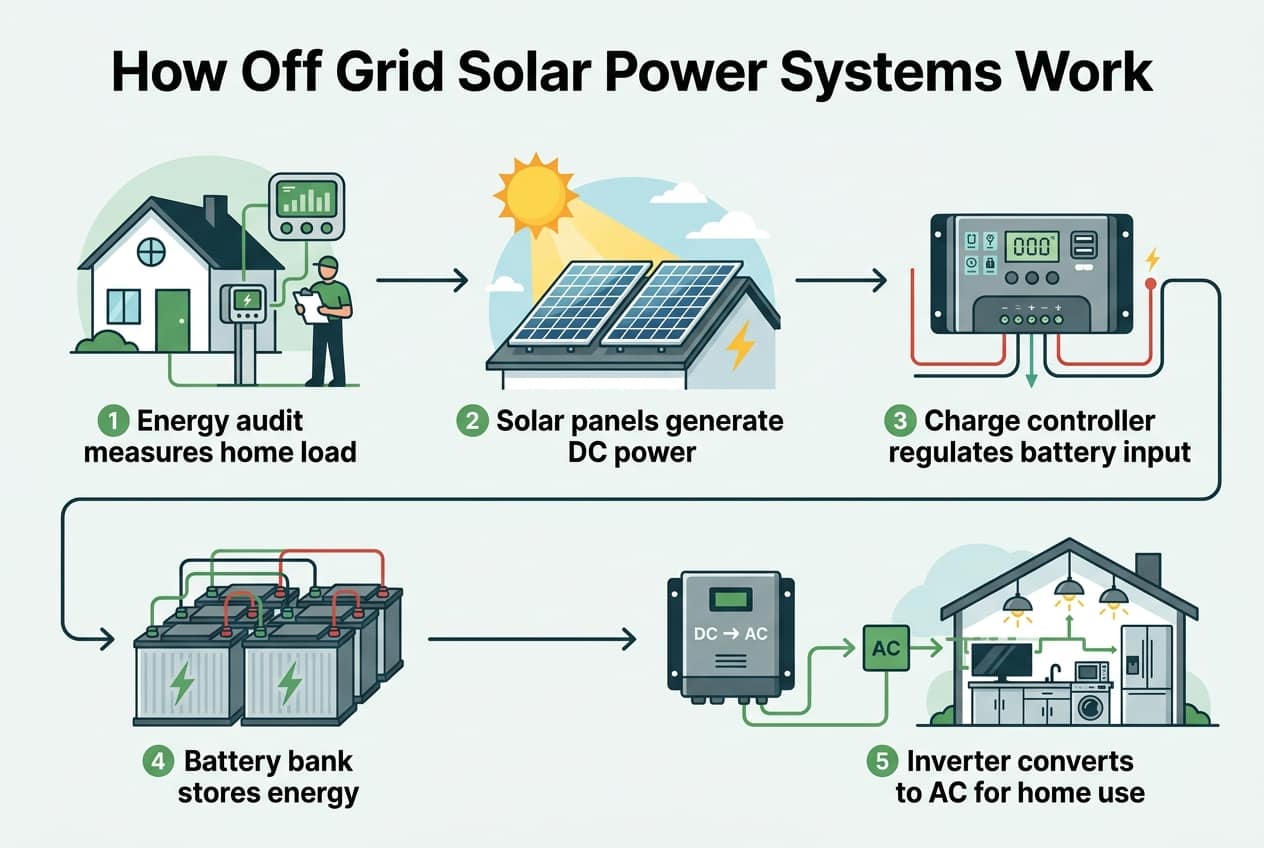
Strip away the marketing and an off grid system is really four parts working as a team. Panels catch sunlight and turn it into DC electricity. The charge controller regulates that flow. It keeps your batteries charging properly without getting cooked by overvoltage. The battery bank stores power for when the sun isn’t shining. And the inverter converts stored DC into the AC power your fridge, lights, and well pump actually use. Take away the utility grid, and these four pieces have to do everything the grid used to do for you.
Here’s the part people miss: this isn’t just about buying bigger panels and calling it a day. Sizing depends on your daily load in kWh, your peak demand in watts at any one moment, and how many “days of autonomy” you need to ride out a stretch of clouds. A well pump and a window AC pulling power at the same moment creates a peak demand spike. A mismatched inverter simply can’t handle that, even if the battery has plenty of stored energy. Get any one of those three numbers wrong and the whole system either underperforms or costs thousands more than it needed to.
Why load reduction comes before system design
Most people want to jump straight to picking panels. That’s backwards. Before anyone sizes a system, your actual household energy load needs to be measured, not guessed at. A home running old appliances, leaky ductwork, and incandescent bulbs everywhere will show a load number that’s artificially inflated. Every oversized panel and extra battery you add to cover that load adds real cost. Reading up on are solar panels worth it is a smart first step before any contractor quote gets involved.
This is where an energy audit earns its keep. It quantifies what your home actually consumes, room by room, device by device, instead of relying on rough national averages. Swapping out aging appliances, sealing drafts with caulking and weatherstripping, replacing bulbs with LEDs, and beefing up attic insulation can meaningfully shrink your daily kWh number before a solar installer ever measures your roof. Seasonal habits matter too, since energy saving tips for summer can shave peak cooling demand right when panels are producing the most. Skip this step and you’re not designing a system — you’re just guessing with extra zeros. A smaller, right-sized system isn’t a compromise. It’s the whole point.
Common Applications for Going Off Grid
Permanent off-grid homes vs. backup-only setups
Some people build a house that will never see a utility hookup. Others just want the lights on when the grid fails. These are two very different projects. Sizing a system for one versus the other changes everything about panel count, battery bank size, and cost. A full-time off-grid home has to cover every watt it uses, year-round, with nothing to fall back on. A backup-only setup only needs to ride out an outage, which is a much smaller job.
Here’s where off-grid systems actually get used, and the differences matter more than most buyers expect:
- Rural electrification for properties where utility poles simply don’t reach, making solar cheaper than running miles of new line;
- Disaster and outage backup for homeowners in storm-prone areas who want power to survive a multi-day blackout without a generator running nonstop;
- Mobile systems built into RVs, cabins, and overlanding rigs, where compact panels and lithium batteries replace a noisy gas generator;
- Solar water pumping for irrigation or livestock supply on land with no nearby power source;
- Hybrid setups that stay grid-tied for daily use but switch to stored solar power the moment utility service drops.
Before chasing any of these, it helps to understand what a full installation actually involves. Reviewing options for solar panel installation near you is a reasonable first step once you know which category fits your situation. And honestly, don’t guess here. A backup system sized like a full off-grid home wastes money. An off-grid home sized like backup power will leave you in the dark.
Off Grid vs. Grid-Tied Solar: Pros and Cons
When off grid makes sense
If you’re tired of the lights flickering every time a storm rolls through, independence has real appeal. An off grid system keeps running when the utility doesn’t, and it shields you from rate hikes for good. No connection means no bill, period. But that freedom comes at a price: bigger battery banks, oversized panel arrays to cover cloudy stretches, and no net metering credits since there’s no grid to sell your extra power back to. You’re building a small private utility, and private utilities aren’t cheap.
When a grid-tied or hybrid system is the smarter choice
For most suburban homes already wired to the grid, a hybrid setup often makes more financial sense than going fully off grid. The table below lays out the trade-offs plainly.
| Factor | Off Grid | Grid-Tied / Hybrid |
|---|---|---|
| Upfront cost | High (batteries + oversized array) | Lower (smaller array, no battery bank required) |
| Outage protection | Full independence | Partial, unless paired with battery backup |
| Net metering | Not available | Available, offsets costs over time |
| Maintenance demands | Higher, especially in remote sites | Lower, utility shares the load |
| Best fit | Rural or remote properties | Suburban homes already on the grid |
Remote installations also face tougher durability demands. Batteries sitting in an unconditioned shed, miles from a service technician, wear out faster and cost more to replace. That’s part of why understanding solar energy maintenance costs matters before you commit to either path. A suburban home, by contrast, can lean on the grid as a backstop while still trimming bills through a hybrid setup. Either way, the smartest move is shrinking your load first. Reviewing practical projects to improve energy efficiency before sizing any system saves you from paying for capacity you didn’t need in the first place.
What Determines System Size and Battery Capacity
Every off grid quote comes down to a handful of numbers. Daily kWh usage, multiplied by the days of autonomy you want during cloudy stretches, sets your battery target. Panel wattage then gets sized against your region’s average sun-hours. The inverter has to cover your worst-case moment of simultaneous demand — fridge, well pump, and microwave running at once, say. Miss any one of these and the system either underperforms or costs far more than it should.
Small cabin setups vs. whole-home systems.
A weekend cabin running lights, a small fridge, and a water pump might use 3 kWh a day. A full-time house with a well pump, electric water heater, and central appliances can easily hit 30 kWh or more. That’s a tenfold swing in panel count, battery bank, and inverter rating — not a small difference. Here’s roughly how that scales:
| Setup type | Daily usage | Panel wattage | Battery bank | Inverter size |
|---|---|---|---|---|
| Weekend cabin | 3 kWh | 600–800W | 5–6 kWh | 2,000W |
| Small full-time home | 10 kWh | 2,500–3,000W | 12–15 kWh | 4,000W |
| Average family home | 20 kWh | 5,000–6,000W | 25–30 kWh | 6,000–8,000W |
| Large whole-home system | 30+ kWh | 8,000W+ | 40+ kWh | 10,000W+ |
Battery capacity isn’t the full usable number, either. Lithium banks are typically rated for 80–90% depth-of-discharge. So a 10 kWh battery really gives you 8–9 kWh before you’re protecting its lifespan. Before sizing anything, it’s worth reading a solar panel installation nj guide to see how regional sun-hour averages change the panel math. And honestly, the cheapest watt is the one you never need: trimming baseline household consumption shrinks every figure in that table at once.
Reducing Household Energy Load Before Any Solar Install
Why a smaller load means a smaller, cheaper system
Every kilowatt-hour you stop wasting is one less kilowatt-hour your battery bank and panel array have to produce, store, and deliver during a cloudy stretch. That math matters a lot once you’re off grid, because there’s no utility line to lean on when the sun disappears for three days. Attic insulation addresses heat loss that would otherwise drive up heating-related electric loads, especially in older homes where warm air just leaks straight up through the ceiling. Cutting demand first is almost always cheaper than buying more solar to cover waste.
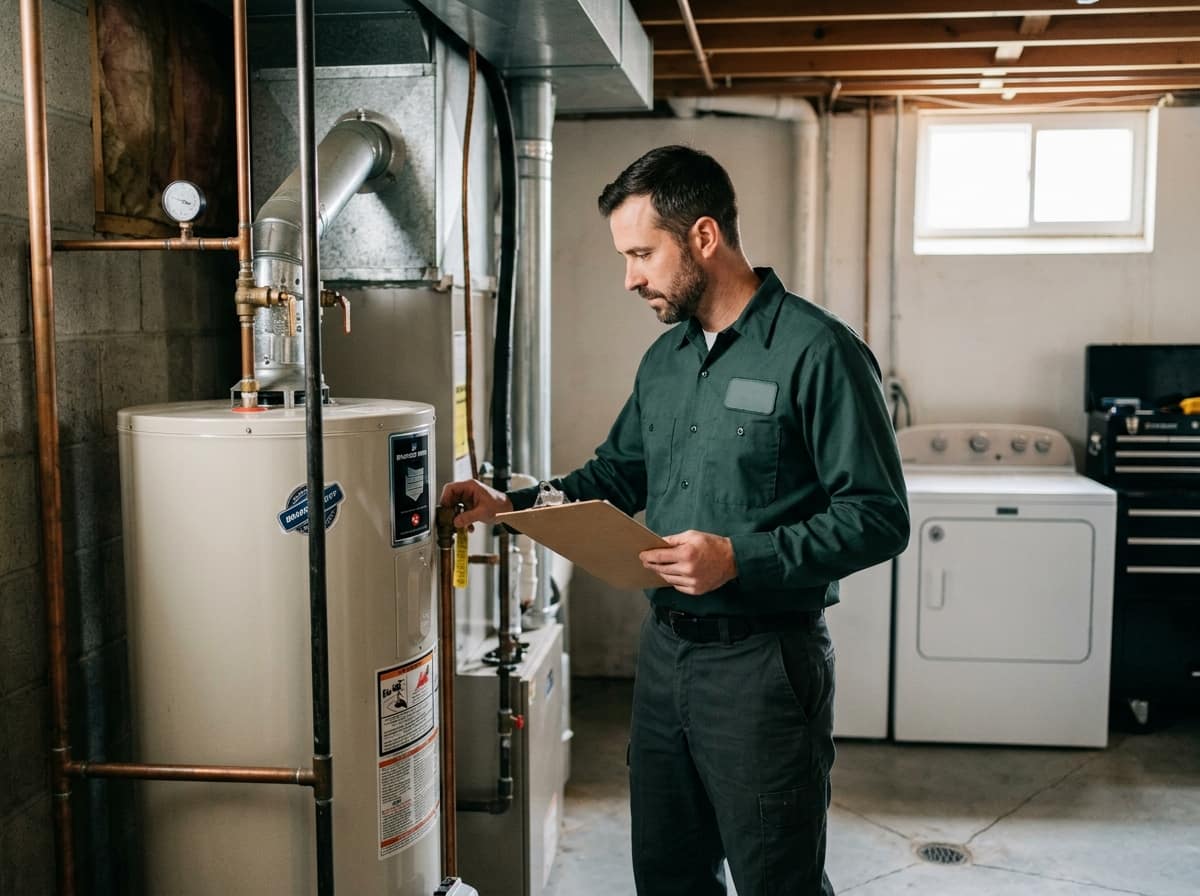
Caulking and weatherstripping stop drafts around existing doors and windows, trimming demand without touching the glass or frames themselves — a modest job that pays back fast. Outdated appliances, aging water heaters, and old boilers also drag down efficiency. Swapping them lowers the baseline load any system has to cover, day in and day out. LED bulb replacement and showerhead or aerator swaps chip away at the smaller stuff, the everyday electricity and water use that adds up over a billing cycle.
Here’s the blunt version: oversizing a solar system to compensate for a leaky house is just an expensive way to ignore the actual problem. Fix the house first. It’s cheaper, and it’s not close.
Where an audit fits before you call a solar installer
An energy audit identifies where a home wastes electricity and gas long before a solar contractor ever shows up with a proposal. It’s a diagnostic step, not a sales pitch. A trained technician walks the house, checks insulation levels, tests for drafts, and looks at how appliances and fixtures are actually performing. That data shapes every decision that comes after, including how big a system you really need. If you’re also weighing battery components, reviewing a Pwm Solar Charge Controller Manual alongside your audit results helps frame how load reduction and charge management work together.
These load-reduction services — attic insulation, caulking, weatherstripping, appliance and water heater swaps, LED and fixture replacement — are handled directly as part of that first phase. Solar PV design, permitting, and interconnection are a separate specialty, handled by a licensed solar contractor once the home’s load is already trimmed down. Many local businesses treat these as two distinct hires, and that’s the right instinct. Swapping an inefficient showerhead sounds minor, but showerhead and aerator replacement is one of the cheapest, fastest ways to shave daily water heating demand before a system gets sized.
Think of it as sequencing, not red tape. Audit first, upgrade what’s wasteful, then bring in the solar specialist with real numbers instead of guesses.
Safety and Home Systems Checks Before Going Off Grid
Gas safety checks for hybrid gas-electric homes
Most homes don’t go fully off grid overnight. You’ll likely keep a gas stove, boiler, or water heater running while solar electric covers the rest. That mix makes gas safety non-negotiable before any installer touches your roof. A hidden leak that seemed minor can turn dangerous once you’re layering in new electrical work and battery equipment nearby.
Before you add solar to the mix, it’s worth running through a short pre-install checklist:
- Gas leak testing to confirm there’s no existing hazard anywhere in the home’s gas lines or appliance connections;
- Gas leak detection using proper equipment, not just a sniff test, especially in older homes with aging pipe fittings;
- Gas leak repair completed and verified before solar contractors begin work in the same mechanical spaces;
- Replacement of a failing boiler or water heater, since swapping it after the solar install means redoing wiring and clearances;
- Light home repair for small issues like loose vents, damaged flashing, or weak attic access points that could complicate equipment runs later.
Skipping these steps to save time almost always costs more later. A crew that has to stop mid-install to fix a gas issue isn’t saving you money. It’s billing you twice.
When to call a licensed electrician vs. an energy auditor
An energy audit looks at how your home uses power and where it’s wasted. It does not touch your electrical panel. Anything involving circuit breakers, rewiring, or EV charger installation needs a licensed electrician, full stop. That’s a different license, different insurance, and different liability than efficiency work. Meanwhile, understanding light home repair and its limits helps you know which small fixes are safe to bundle with efficiency upgrades and which ones genuinely need a specialist’s sign-off. Mixing these up isn’t just inefficient. It can void a permit or an inspection.

Frequently Asked Questions About Going Off Grid
Is going off grid worth it for a suburban home?
The honest answer: it depends on what you actually need to power, not what you think you use. System size should be based on a reduced household load after you’ve trimmed waste, not on your current utility bill. A home still running old appliances and incandescent bulbs will need a far bigger battery bank than one that’s already cut consumption. That gap often costs thousands in unnecessary panels and batteries.
Off-grid systems cost more upfront than grid-tied setups because you’re paying for battery banks, charge controllers, and backup capacity the utility normally provides for free. There’s no monthly bill once it’s running, but the payback period can stretch past a decade. If you’re curious how the math stacks up against staying connected, it’s worth reading a comparison of is solar cheaper than electric before committing either way.
For a suburban lot with reliable grid access, full off-grid independence is rarely worth the premium. It makes more sense in remote areas with weak utility infrastructure. Choosing a system means weighing lithium iron phosphate versus lead-acid batteries, sizing the inverter for peak loads, and deciding how many cloudy “autonomy days” you need covered. Before any of that, income-eligible homeowners may qualify for free upgrades through the NJ Comfort Partners Program, which can shrink the load the solar system ever has to carry.
Building a Lower-Load Home Before You Go Solar
A practical sequence for Pine Brook area homeowners
Here’s the mistake people make: they price out panels and batteries before they know what their house actually burns. Fix the order, and you fix the budget. A smaller, cheaper system can carry a lower-load home just fine. A bloated one, built around waste, costs you thousands you didn’t need to spend.
Work through the house in this order, and don’t skip steps:
- Start with a whole-home energy audit that measures actual consumption, hour by hour, and flags where you’re bleeding power or heat.
- Tighten the attic with insulation and air sealing, since heating and cooling losses there often outweigh everything else combined.
- Swap out aging appliances, boilers, and water heaters that quietly draw more power than their modern equivalents.
- For any hybrid system mixing gas and electric, make sure gas leak repair and testing happen before anything gets wired together.
- Only then bring in a licensed solar contractor, sizing the system against your new, reduced numbers instead of old bills.
Skip that sequence and you’ll likely oversize the array, overpay for batteries, and still deal with drafty rooms. Load reduction first; hardware second. It’s not glamorous, but it’s the part that actually saves money.
Before bringing in a radon mitigation specialist, it’s worth asking how the home performs more broadly — where air moves, where it escapes, and how much strain that puts on everything else. A skilled team that treats efficiency as a whole-house question, not a single fix, often makes the rest of the job easier and more cost-effective. The company you choose for that piece matters less than making sure the sequence is right: handle the specific hazard with the right specialist, then look at the envelope.
