


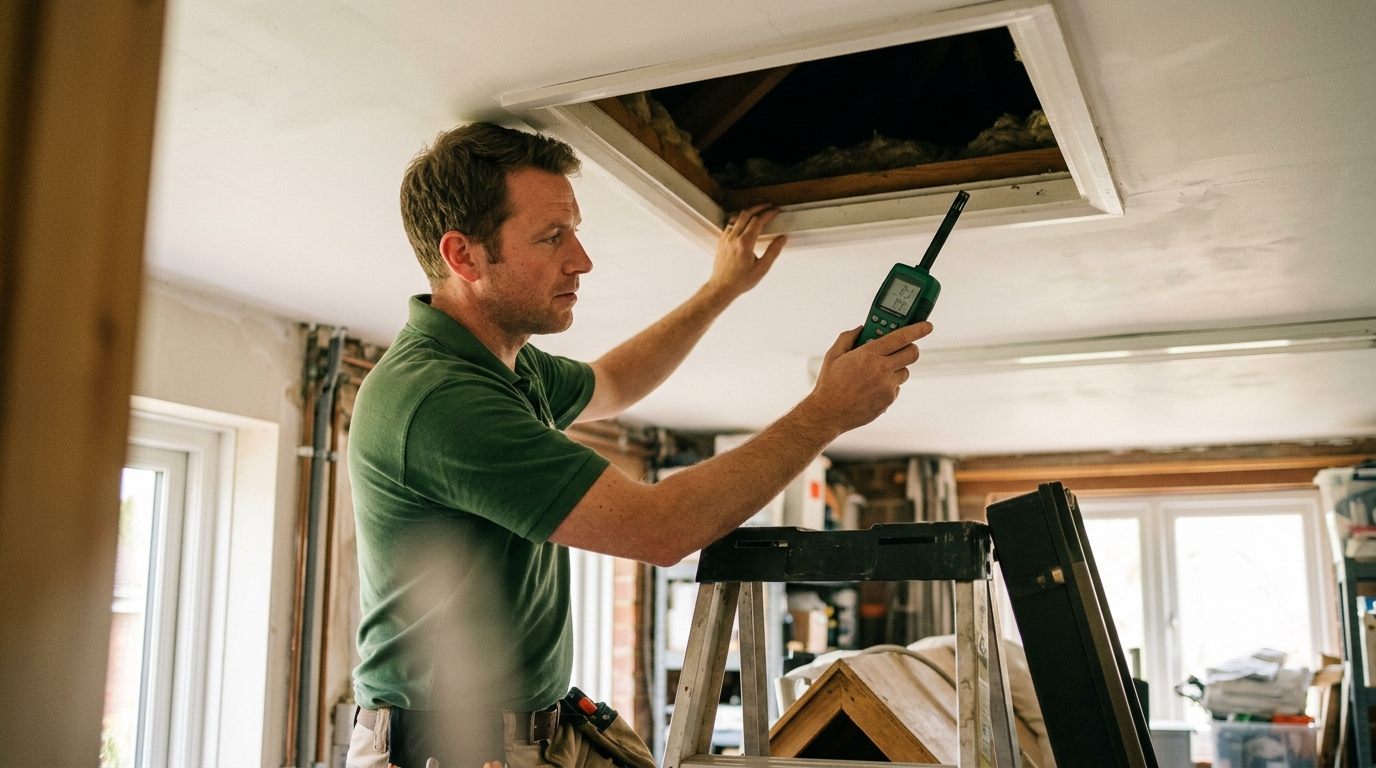
Sticky windows in winter. Musty basement air in summer. That nagging sense your thermostat is lying to you. These are the moments a hygrometer home check finally earns its place on your counter. The numbers themselves are simple. What they mean for your walls, your wallet, and your health is not. This guide breaks down real readings, the humidity range you should actually target, and what’s likely causing the swings — plus which fixes are worth calling a pro for.
Why a Hygrometer Home Setup Matters More Than You Think
What Humidity Imbalance Signals About Your House
A little number on a cheap gauge tells you more than you’d expect. Indoor humidity isn’t just a comfort setting. It touches your health, your energy bills, and the bones of your house itself. When moisture levels swing too far in either direction, your body notices first. But your walls, windows, and wood trim are keeping score too. That reading is a symptom, not a random data point.
Go under 30% and you’ll feel it fast: static shocks on doorknobs, dry sinuses, that scratchy feeling in your throat by mid-winter. Wood floors and furniture crack or pull apart at the seams because they’re losing moisture to the air around them. It’s not just annoying. It’s your house telling you the air is starving for humidity, often because heating systems are running dry all season with nothing to replace what’s lost.
Cross 50% and the problems flip entirely. Mold gets a foothold, dust mites multiply, and you’ll start smelling that musty odor in closets or basements before you see any visible sign. Condensation beading on windows in the morning is a classic tell. A hygrometer flags all of this cheaply, but it’s a diagnostic tool only. It won’t seal a draft or dry out a damp crawlspace on its own. Readings only matter once you act on what they reveal about your home’s envelope, which is why pairing them with an energy audit approach makes the number actually useful.
Types of Hygrometers and How They Work
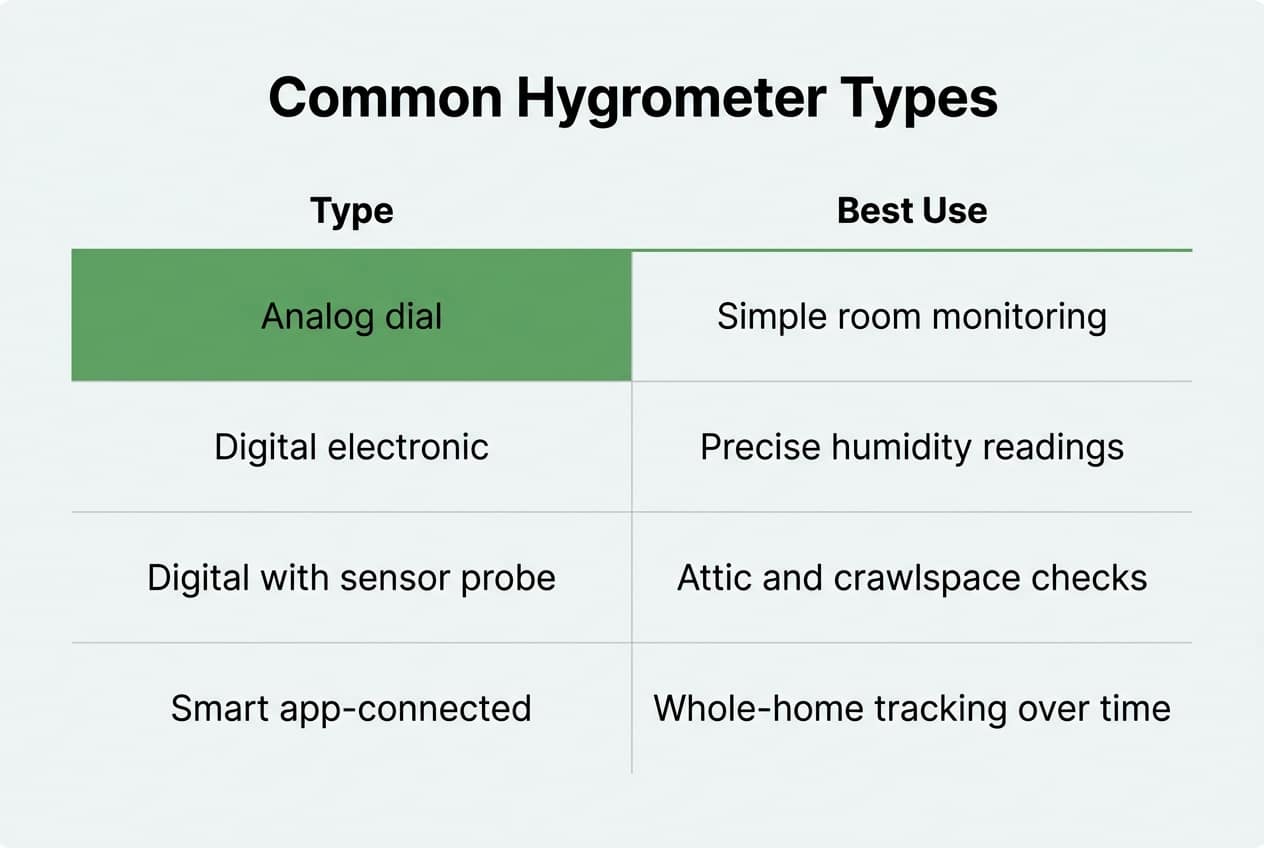
Every hygrometer boils down to one of three designs, and knowing the difference saves you from buying the wrong tool. Analog dial models use a coiled spring or hair-tension mechanism that expands and contracts with moisture. Digital units use a capacitive sensor that reacts to humidity and converts it into a number. Smart models add wireless chips so readings travel to your phone. Each has a place. But they’re not interchangeable.
Digital vs Analog Accuracy
Analog gauges need no batteries and last for years, which is why you’ll still find them in cigar humidors and wine cellars. But they drift over time and can be off by 5-10 percentage points if not calibrated. Digital versions read faster, usually pair with a temperature sensor, and fit on a small display you can check at a glance. Here’s the blunt truth: if you’re relying on a decades-old dial gauge for real decisions, you’re basically guessing.
| Type | Power Source | Typical Accuracy | Best Use |
|---|---|---|---|
| Analog (spring/dial) | None needed | ±5-10% | Cigar boxes, wine storage |
| Digital (capacitive) | Battery | ±2-3% | Bedrooms, nurseries, offices |
| Smart Wi-Fi/Bluetooth | Battery or plug-in | ±2-3% | Whole-home monitoring, remote alerts |
| Combo digital hygrometer-thermometer | Battery | ±2-4% | Quick room checks |
Smart Sensors and Remote Alerts
Connected models take things further. They log data over weeks or months, push alerts to your phone when humidity spikes, and let you place sensors in multiple rooms at once. That’s handy if a basement or attic tends to run damp while the rest of the house stays fine. Some apps even chart trends against outdoor weather, which helps you catch problems before they show up as mold or peeling paint. Worth noting: the same envelope work that stops drafts also stabilizes humidity readings, since air leaks let outside moisture pour in. A good attic insulation assessment often turns up the real source of erratic numbers. Placement still matters more than the gadget itself. Keep any hygrometer away from windows, vents, and direct sunlight, since those spots skew readings and won’t reflect the room as a whole. Many owners researching air quality also cross-reference general climate-control guidance, and even material written for AC installation touches on how humidity control ties into comfort — worth a read elsewhere if that’s the project you’re planning, since it’s not something NECINJ handles. A cheap sensor placed badly beats an expensive one placed well. Remember that before you overspend.
Choosing the Right Hygrometer for Your Rooms
Room-by-Room Placement Tips
Not every room needs the same tool. A single hygrometer near the thermostat tells you almost nothing about the bathroom or the crawl space. If you’re serious about tracking humidity across the whole house, think in zones first, then pick devices to match each one.
- Living areas: a mid-range digital unit with a simple percentage display is plenty here — you’re just watching general comfort, not chasing precision.
- Bedrooms: go quiet and dim. A unit with a low-glow screen and no chirping alerts won’t wreck your sleep, and health-focused models that flag mold-friendly ranges are worth the extra few dollars.
- Attic or crawl space: temperatures swing wildly here, so you need a rugged sensor rated for heat and cold extremes, not a delicate indoor gadget.
- Basement: this is the moisture magnet of the house. A model with continuous logging catches slow creeps in dampness that a quick glance would miss entirely.
- Kitchens and bathrooms: expect sharp, short spikes from cooking steam and showers, so look for a fast-response sensor rather than one built for stable readings.
- Whole-home trackers: if you want everything on one app, match the sensor count to your zone count — a three-sensor kit covering bedroom, basement, and living room beats one unit moved around the house.
Placement matters as much as the device itself. Keep sensors away from vents, windows, and direct sunlight, since all three skew readings and make comparisons across rooms useless. For seasonal context, reviewing practical energy saving tips for summer helps explain why humidity climbs indoors even when the AC is running. And once you’ve settled on your setup, keeping a note of your contacts for trusted local pros means you’re not scrambling when a reading points to a real problem.
Reading the Numbers: What Counts as Healthy Indoor Humidity
Winter vs Summer Target Ranges
Most health and building authorities land in the same spot: the EPA and ASHRAE generally point to 30-50% relative humidity as the healthy indoor range. Stray below that floor and you’ll feel it fast — dry skin, cracked lips, random nosebleeds, that zap of static shock every time you touch a doorknob. Wood floors and furniture shrink too, leaving visible gaps between boards. It’s not just discomfort. It’s your house quietly drying out around you.
Go too high, past 50%, and the problems flip. Condensation forms on windows and cold pipes, mold gets the moisture it needs to spread, dust mites multiply in bedding and carpet, and that musty basement smell creeps upstairs. Neither extreme is rare. Plenty of homes swing through both in a single year. Reviewing practical projects to improve energy efficiency often turns up humidity as a side effect of drafts or poor insulation, not a standalone issue.
Seasonal swings are normal, and that’s worth repeating. Winter heating dries indoor air, sometimes dropping it into the teens or twenties percent, while summer’s warm, humid outdoor air pushes readings up, especially in basements. A single reading tells you almost nothing. Watch a hygrometer over several weeks, though, and patterns emerge — that’s when you actually know what you’re dealing with. Some homeowners track results in a blog or simple spreadsheet just to spot the drift before it becomes a real problem.

When High or Low Readings Point to a Bigger Home Problem
What an Energy Audit Adds That a Sensor Can’t
A hygrometer sitting at 65% humidity all summer isn’t the problem. It’s the messenger. Persistent high readings usually trace back to air leaks around sills, pipes, and window frames that let outdoor moisture pour in faster than your home can dry out. Poor attic insulation compounds it, trapping heat and damp air right above your living space, which pushes humidity levels up even when your AC is running fine. The number on the dial is just a symptom of a leakier envelope.
Winter dryness works the same way, just in reverse. If your gauge reads 25% and your skin feels like paper, that’s usually not a furnace problem. It’s draftiness — cold, dry outside air sneaking in through gaps faster than your home can regulate moisture levels. More air exchange means more dry air replacing what little humidity you had. No amount of tabletop humidifiers fixes a structural draft. They just fight it on repeat, every single day.
This is where a whole-home energy audit earns its keep. It looks past the single-room reading and checks insulation depth, air leakage rates, and moisture patterns across the entire structure — attic, basement, walls, ductwork penetrations, all of it. A sensor tells you something’s off. An audit tells you where and why, with actual measurements instead of guesswork. That distinction matters if you’re tired of buying gadgets that treat symptoms.
Sealing up the small gaps often does more than people expect. Caulking and weatherstripping around doors, windows, and utility penetrations cut down the uncontrolled air exchange that drives those humidity swings in the first place. It’s not glamorous work, but it’s often the cheapest fix with the fastest payoff. Attic insulation plays a similar role, stabilizing the temperature and moisture transfer between your living space and the roof cavity above it, so conditions upstairs stop dragging the whole house out of balance. If you’re weighing bigger upgrades like a solar array down the road, know that solar design, permitting, and installation come from a dedicated solar contractor — it’s worth noting that solar panel service near me pine brook options work best once your home’s energy load is already trimmed down through an audit first. And if you want a sense of how sensitive humidity measurement technology can get, it’s the same principle behind a two-channel, tunable diode laser systems used in atmospheric moisture research — precision instruments built on the same basic idea as the one on your wall. In the end, a hygrometer flags the symptom. An audit finds the structural cause. Only one of those actually fixes anything.
Hygrometer Readings vs Other Home Issues: Getting the Right Help
Mold, Moisture, and When to Call a Specialist
A high reading on its own is just information. Pair it with dark spots on drywall or a musty smell, though, and you’ve got a health issue, not a data point. That calls for a certified mold remediator, full stop — an energy audit or attic insulation won’t remove what’s already growing, and removal itself falls outside what NECINJ does. Similarly, a basement that smells damp usually points to below-grade moisture working its way up through the slab or foundation walls. An audit can still be useful here: it documents heat loss patterns throughout the home, even though the actual insulation work happens up in the attic, not down below.
Before you assume it’s purely a humidity problem, rule out a few other culprits first. Here’s when to bring in someone else before touching your own equipment:
- Visible mold on walls, ceilings, or window sills means a certified remediator handles removal before any other work begins.
- A musty basement smell without visible growth still warrants a proper moisture assessment, since trapped dampness often precedes mold.
- Humidity that spikes or crashes alongside a sputtering furnace or failing AC points to equipment trouble a licensed HVAC contractor should service first.
- Unexplained odors that smell more like rotten eggs than mildew could signal a gas issue, which needs gas leak detection and repair, not a dehumidifier.
Drafts, Dryness, and Air Sealing Options
Cold, dry winter air often traces back to drafty windows letting outside air bypass your heating system entirely. Caulking and weatherstripping around existing frames close those gaps and can noticeably steady indoor humidity swings. It’s a modest fix, though. It won’t replace an old sash or upgrade single-pane glass. That’s a separate project for a window contractor, not something air sealing addresses. Think of it as damage control for the window you already have, not a renovation.
One more distinction worth nailing down: radon. It’s a gas hazard, completely unrelated to moisture, and no hygrometer will ever pick it up. You’d need a certified radon tester for that — it’s a different hazard from the natural gas leak detection and repair NECINJ handles, and the two should never be confused. Interestingly, the same instrument-grade thinking behind consumer hygrometers shows up in specialized fields; NASA’s atmospheric research, for instance, relies on a Cryogenic Hygrometer | BioSCape – ESPO – NASA for precision moisture readings far beyond household needs. Back on the ground, if drafts are your main complaint, learning about caulking as a low-cost first step makes sense before considering bigger structural changes.
Comparing Common Fixes for Humidity-Related Home Discomfort
A hygrometer just tells you there’s a problem. It won’t tell you which fix actually solves it, and that’s where most people waste money. Some options treat symptoms for a season, others change the building itself. Here’s how the common approaches stack up.
Quick Fixes
A portable dehumidifier is the classic band-aid: plug it in, it pulls moisture from one room, and you empty a tank every day or two. It’s cheap and fast, but it does nothing about where that moisture is coming from. A standalone humidifier works the opposite direction for dry winter air, adding moisture back into a room — though it needs regular refilling and cleaning, since a neglected tank can grow bacteria fast. Both are stopgaps, not solutions.
Structural Solutions
Caulking and weatherstripping seal the draft points around doors and windows that let humid or dry outdoor air pour in uncontrolled. It’s inexpensive, quick to install, and it stops the air exchange that’s often driving the swings your hygrometer picks up. Attic insulation goes further, stabilizing temperature transfer and reducing the heat and moisture movement between attic and living space — a slower project, but a lasting one. An energy audit sits above both: it’s the diagnostic step that figures out which combination actually applies to your house before you spend on any of it, and reviewing published evaluation of UT/LS hygrometer accuracy by intercomparison data shows why measurement precision matters before committing to a fix. Income-eligible households may qualify for audit-recommended work like insulation and air sealing at no cost through the NJ Comfort Partners Program — a screening question worth asking upfront, rather than assuming you’ll need to file for rebates yourself.
| Fix | Cost | Scope | Fixes the Source? |
|---|---|---|---|
| Portable dehumidifier | Low | Single room | No |
| Standalone humidifier | Low | Single room | No |
| Caulking & weatherstripping | Low–moderate | Doors, windows, whole home | Partially |
| Attic insulation | Moderate–high | Whole home | Yes |
| Energy audit | Varies, often free | Whole home diagnostic | Identifies it |
Notice the pattern: cheaper fixes treat one room, structural ones treat the house. If you’re serious about long-term comfort rather than a rotating cast of gadgets, broader energy conservation measures tend to outperform anything plugged into a wall outlet.
Building a Long-Term Humidity Monitoring and Home Comfort Routine
Turning Data Into Action
A hygrometer isn’t a one-and-done gadget. Check it weekly when seasons shift, fall into winter and spring into summer, since those transitions are when heating systems kick on or off and humidity swings hardest. A quick glance twice a week catches problems before they become mold or cracked woodwork. Jot the numbers down. Patterns matter more than any single reading, and a logbook — even a scrap of paper on the fridge — turns guesswork into evidence.
Track the highs and lows against what’s happening in the house. A spike after a long shower or a big pasta dinner is normal; a spike that lingers for hours points to poor ventilation. Context turns a number into a diagnosis. Once you’ve sealed drafts or added attic insulation, recheck readings over the following weeks to confirm the fix actually held, rather than assuming it worked.
Sensor data is useful, but it’s not the whole picture. Every few years, pair it with a full professional energy audit that looks at insulation, air leaks, and appliance performance together — our services page outlines the kind of full-home reassessment worth repeating periodically. Small daily habits do a lot of quiet work too: closing the bathroom door when you shower, running exhaust fans, cracking a window during cooking. None of that fixes a structural problem, but it steadies the readings between bigger repairs. If numbers stay stubbornly outside the 30-50% range despite the basics, that’s your sign. Bring in a residential energy conservation team like the one at 16 Chapin Rd., Suite 910, Pine Brook, NJ, for a proper look — customers there often mention the company’s efficiency, the skilled team, and how smoothly the job gets done. That’s especially worth doing if moisture issues suggest something worth reviewing against the Brief Guide to Mold, Moisture and Your Home. Persistent readings rarely fix themselves.
Before deciding, it’s worth asking what’s actually driving the discomfort or the high bills — sometimes the honest answer points toward a licensed specialist for the bigger mechanical work, and sometimes it’s simpler than that. Reviewers tend to bring up the same things: a company that shows up efficient, gets the job done, and sends a skilled team who explain what they’re doing along the way. Weigh that kind of straightforward, well-executed help against whatever larger project you’re considering, and choose the path that actually fits the problem in front of you.
