


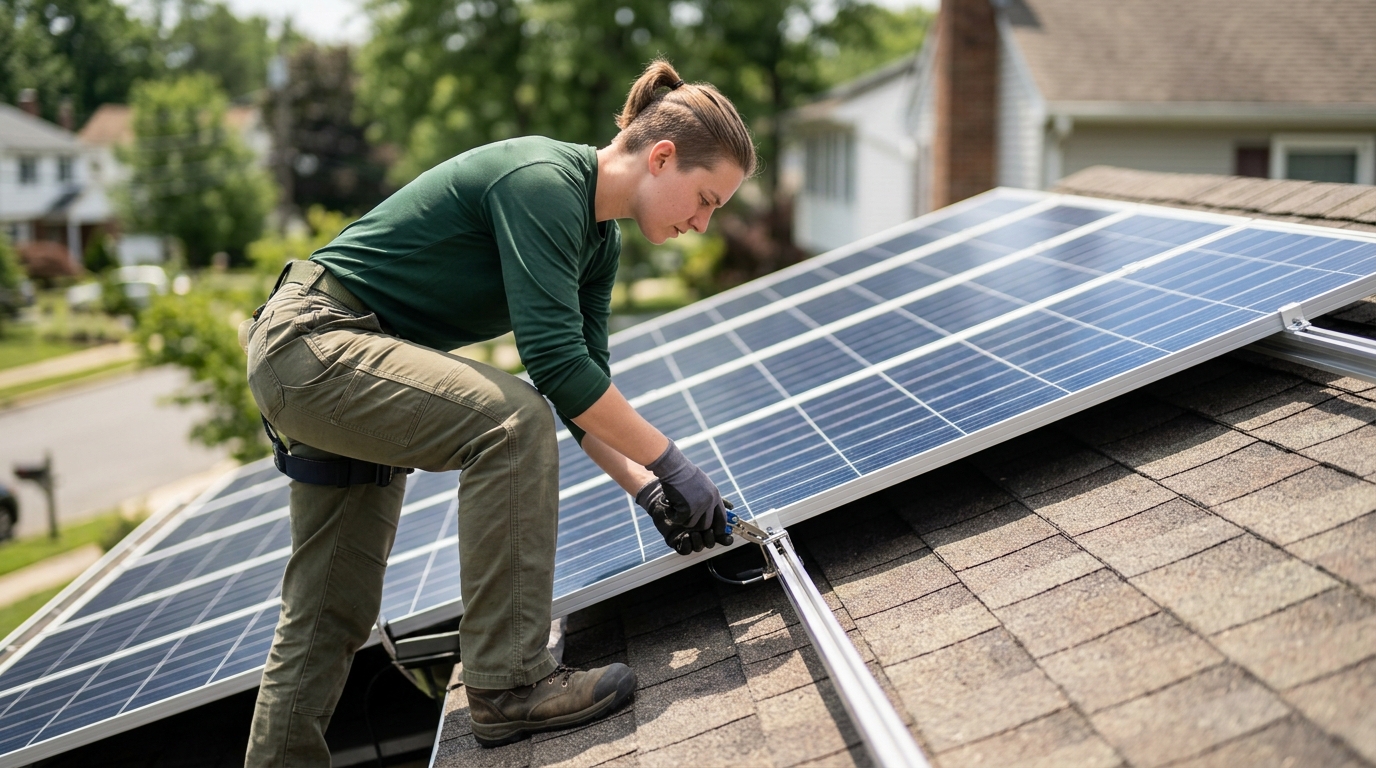
Your solar panels were supposed to run themselves. Instead, you’re staring at a dip in production and a phone list of companies you know nothing about. Choosing between solar panel maintenance contractors shouldn’t feel like a gamble, especially when your system’s performance and warranty coverage are on the line. This guide breaks down what separates a reliable contractor from a costly mistake, so you can protect your investment with confidence.
Why Solar Systems Need Ongoing Professional Care
How Performance Loss Shows Up on Your Utility Bill
Solar panels don’t fail overnight. They fade slowly, a little more each season, as dust, pollen, tree debris, and shading creep in and block sunlight from hitting the cells. You won’t notice it day to day. Your bill will, though. That gradual buildup is often the first quiet sign that efficiency is slipping, long before anything looks visibly wrong on the roof.
Here’s the part most homeowners don’t expect: it’s rarely the panels themselves that cause the biggest problems. Inverters and wiring degrade faster and account for the majority of performance complaints. A weakening inverter can quietly cap your system’s output for months before it throws an error. If you’re weighing whether the investment still pencils out, revisiting whether are solar panels worth it after a few years of ownership is a useful gut check, especially once maintenance costs enter the picture.
Northeast weather doesn’t do panels any favors either. Humidity, spring pollen surges, and storm debris all accelerate wear compared to drier climates. The blunt truth: an unmaintained system can quietly underperform by 10 to 25 percent, and nothing on the roof will tell you that. Catching small issues, a loose connection, a hazy panel, a shaded corner, early on prevents them from snowballing into full-system repairs. Homeowners already tackling attic insulation or weatherstripping to cut energy waste elsewhere in the house should treat solar upkeep the same way, as one more system that pays you back for paying attention to it.
Signs Your Solar Panel System Needs a Maintenance Contractor
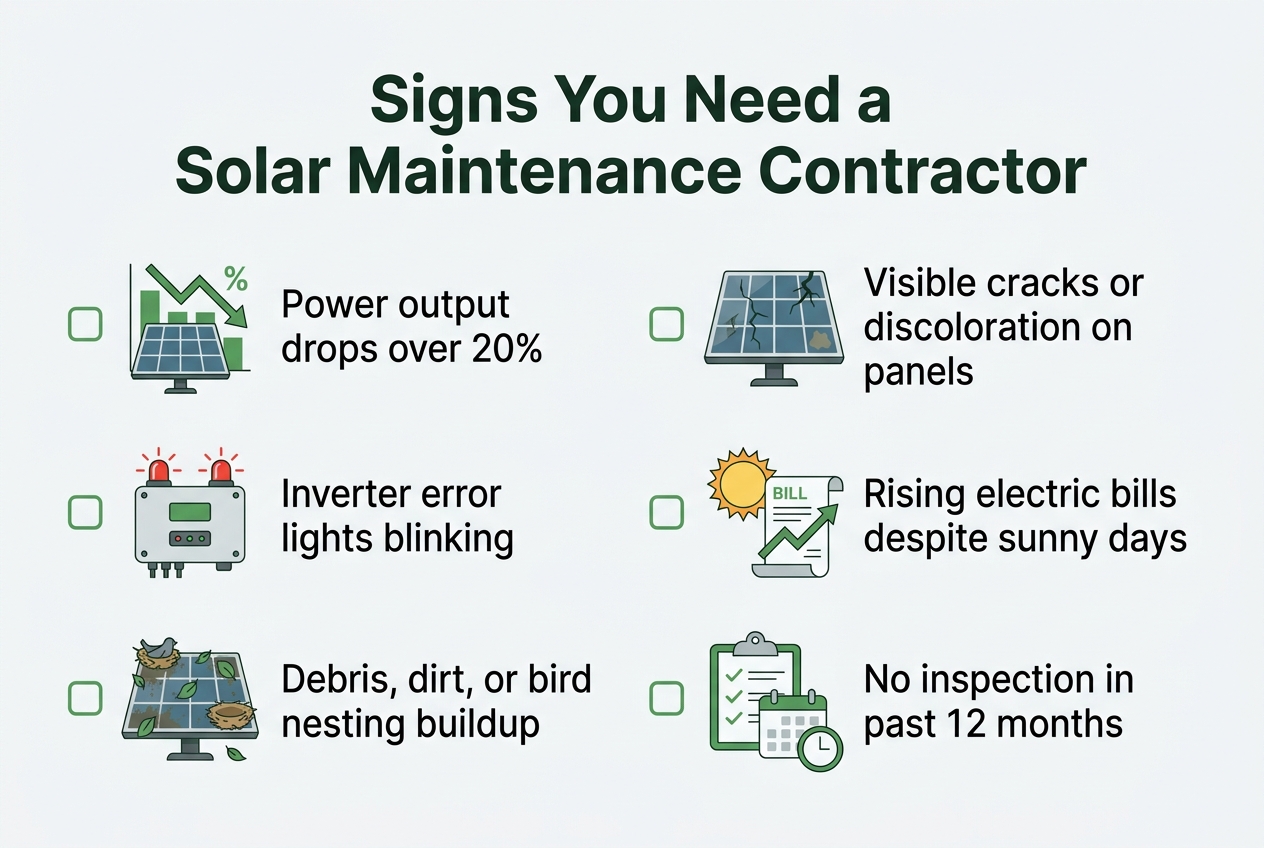
Most solar systems run quietly in the background for years. That’s exactly why homeowners miss the warning signs. Your panels won’t call attention to themselves until something’s already gone wrong, so it pays to know what trouble actually looks like before it costs you real money.
Here are the red flags that mean it’s time to call in a professional rather than wait it out:
- A sudden drop in output shown in your monitoring app, especially a dip of 15% or more over a week or two with no obvious cause like weather or shading;
- Inverter error codes or a blinking warning light on the unit itself, which often signals a wiring fault, a failing component, or a communication breakdown between panels and inverter;
- Physical damage such as cracked glass, browning or discolored cells, or mounting hardware that’s come loose after a storm;
- Utility bills that climb even though your system is still generating power, which usually points to a hidden efficiency loss somewhere in the array or connections;
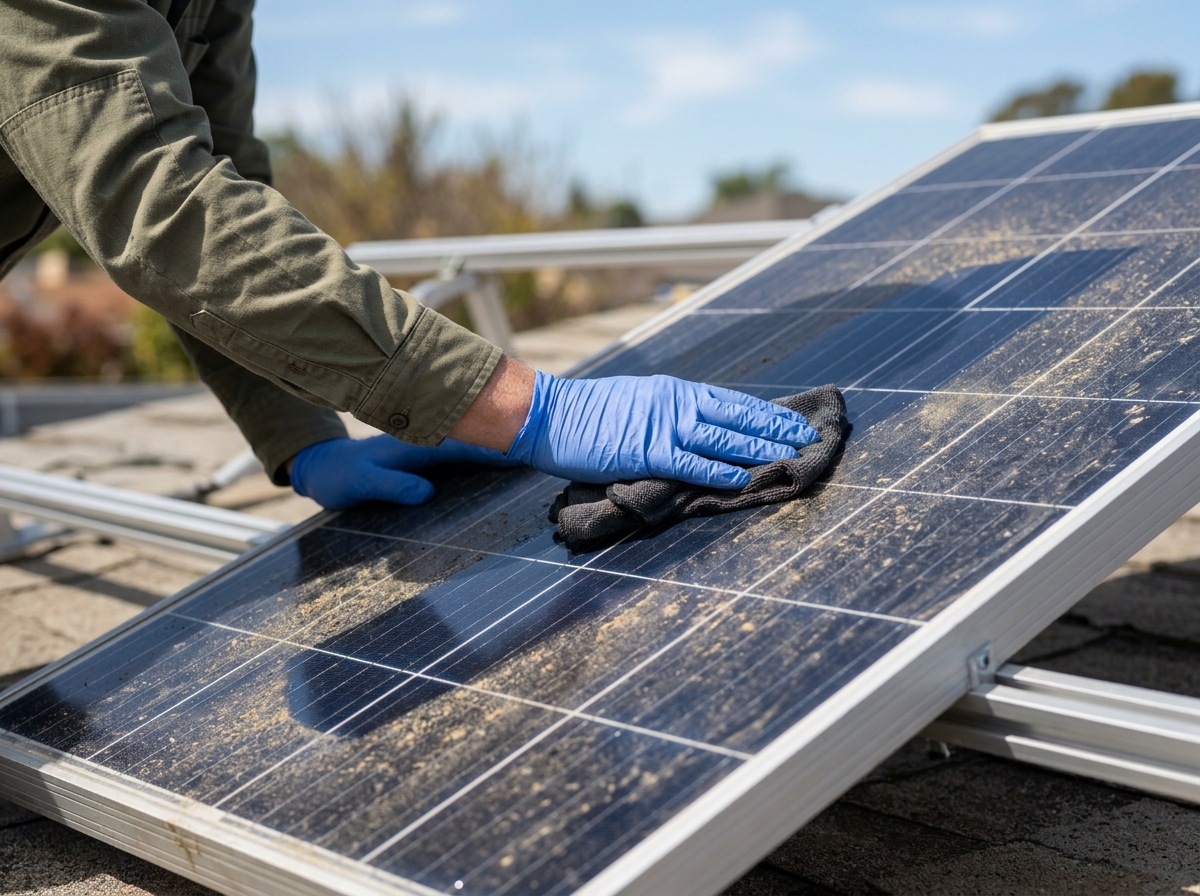
- Visible debris buildup, staining, or streaking across panel surfaces, along with any roof leaks appearing near the mounting brackets.
None of these are things to shrug off. A leak near a mount, for instance, can quietly rot roof decking long before it ever shows up inside the house. If you’re also noticing drafts or temperature swings elsewhere, it’s worth checking whether attic insulation or weatherstripping needs attention too — solar issues rarely travel alone. And if you’re weighing whether the investment is still paying off, revisiting whether solar panels save money for your specific setup can help you decide how urgently to act.
solar panel maintenance contractors: What Services They Actually Provide
What a Standard Tune-Up Visit Includes
A basic tune-up starts with the obvious: cleaning the panels and giving the racking a visual once-over. Dirt, pollen, and bird droppings can cut output by 5% to 25% depending on your region, and a technician will check that mounting bolts, flashing, and clamps haven’t loosened from wind or thermal cycling. It’s not glamorous work. But skipping it is how small problems turn into expensive ones.
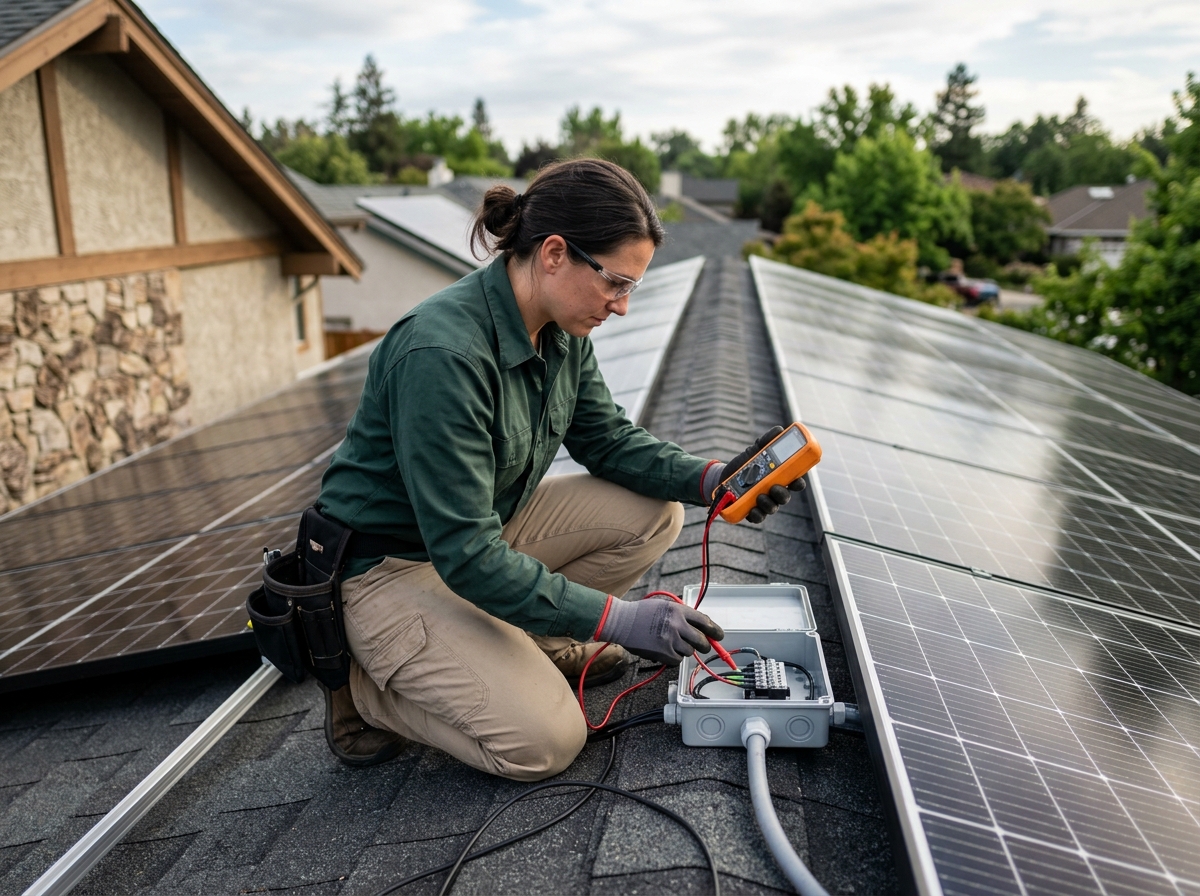
Beyond the surface, a proper visit includes inverter diagnostics — pulling error logs, checking for fault codes, and confirming the unit is converting DC to AC efficiently. Wiring checks matter just as much, since loose connections or corroded junctions are a leading cause of underperformance and, in rare cases, fire risk. Technicians often use thermal imaging cameras to spot hot spots on panels before they fail outright, similar to how an electrician might scan a breaker panel for trouble.
If you’re comparing service quality across providers, it helps to see how other regions structure these visits; a rundown like Top 10 Solar Panel Maintenance Companies in Arizona shows the range of what “standard” can mean. Some visits also flag related home issues worth addressing, like drafty attics where attic insulation upgrades would pair well with your solar savings.
How Often Professional Service Is Recommended
Most manufacturers and installers recommend a full annual inspection at minimum — one that benchmarks current output against your system’s original performance data. This is where you find out if year-three production has quietly slipped 8% below what it should be. Homes near trees, coastlines, or heavy construction dust may need a check every six months instead.
If you’ve added battery storage, that changes the schedule too. Batteries need their own maintenance and monitoring — checking charge cycles, temperature regulation, and firmware updates — often on a quarterly basis rather than annually. Neglect that, and you shorten the battery’s lifespan considerably. That’s a costly mistake, plain and simple.
Roof issues also drive off-cycle visits. When a leak shows up under panels, or a roofer needs panels removed for reroofing, your solar contractor should coordinate directly with the roofing crew for safe removal and reinstallation. Good contractors document everything from this process — photos, timestamps, performance data before and after — since this paperwork is exactly what warranty claims and insurance disputes require. Keep it filed alongside records for other home upgrades, whether that’s a water heater replacement or recent gas leak repair, so you have a complete maintenance history in one place. Homeowners curious about complementary shading options for west-facing windows can also learn how solar shades work alongside their panel system. For a broader look at how these visits fit into general upkeep, our services page outlines related offerings worth knowing about.
Comparing Your Maintenance Options
Homeowners usually weigh three paths: a specialized solar maintenance company, a general electrician, or handling things yourself. Each has real tradeoffs in cost, safety, and how deep the expertise actually goes. Before locking in a decision, it helps to see how they stack up side by side.
| Option | Typical Cost | Expertise Level | Warranty Protection | Safety Setup |
|---|---|---|---|---|
| Specialized solar contractor | $150–$400 per visit | Certified, inverter and panel-specific training | Usually preserved | Harnesses, roof anchors, insulated tools |
| General electrician | $100–$250 per visit | Strong wiring skills, limited solar-system nuance | Sometimes voided | Basic fall protection, not roof-specialized |
| DIY homeowner | $20–$50 in supplies | Visual inspection only | At risk if panels are touched | Ground-level only, no rooftop gear |
A specialized provider brings the full package: certification, rooftop-rated harnesses, and training on inverter diagnostics that most electricians never receive. That’s not a knock on electricians — they’re excellent for rewiring a panel or fixing a breaker issue. But solar-specific troubleshooting, like tracing a production dip back to a faulty microinverter, is a different skill set entirely. Search for Service & Repair providers who list solar credentials specifically, not just general electrical licensing.
DIY has its place, honestly. Rinsing panels with a hose or checking for visible cracks from the ground is fine. Climbing up there yourself isn’t. Beyond cleaning, the smartest move is pairing panel upkeep with broader home efficiency work — attic insulation, caulking, and weatherstripping all reduce the energy load your solar system needs to cover, and reviewing projects to improve energy efficiency can point you toward the next worthwhile upgrade.
What to Look for When Hiring a Contractor
Not every crew with a truck and a ladder is qualified to touch your solar array. Before you sign anything, you need to know who you’re really hiring. A few basic checks can save you from costly mistakes down the road, and they take less time than you’d think.
- Licensing and insurance should be current and specific to electrical or solar work, not a general contractor’s license that happens to cover home repairs too.
- Manufacturer certifications matter more than most homeowners realize, since a tech trained on your inverter brand will spot problems a generalist might miss entirely.
- Itemized pricing should break down inspection fees, cleaning, diagnostics, and repair labor separately, so you’re not stuck guessing what you actually paid for.
- Emergency availability counts for a lot; a company that only handles new installations won’t be much help when your system goes dark on a Sunday.
- Documented findings, including before-and-after photos and actual performance data, give you proof the work was done and a record for future reference.
- Local track record, meaning real years of service in your area and reviews you can verify, tells you more than any glossy brochure.
Ask direct questions and expect direct answers. If a company dodges when you ask about experience with your specific panel brand, that’s a red flag worth taking seriously. Many local businesses handle similar diagnostic work for home systems, and knowing what a quality inspection looks like, whether it’s for solar or otherwise, helps you set fair expectations; researching a Solar Panel Repair Service in another market can even give you a useful baseline for pricing and process. The same scrutiny you’d apply to hiring someone for light home repair or attic insulation work applies here. It’s your roof, your investment, and your electric bill on the line.
Typical Costs and Service Agreements
Solar upkeep pricing isn’t one-size-fits-all. Some outfits charge a flat fee per visit, others push an annual plan, and knowing the difference matters before you sign anything. A single service call for cleaning or a basic inspection typically runs less than what you’d pay piecemeal over a year if something bigger goes wrong. Bundled plans usually win on cost if your system is more than a few years old.
Here’s a rough breakdown of what homeowners commonly encounter, based on typical market ranges:
| Service Type | Typical Cost Range | What Triggers It |
|---|---|---|
| One-time inspection/diagnostic | $100–$300 | Suspected drop in output, routine checkup |
| Panel cleaning (per visit) | $150–$350 | Dust, pollen, bird droppings, seasonal buildup |
| Inverter repair or replacement | $1,000–$2,500 | Error codes, zero output, aging equipment |
| Battery repair or replacement | $2,000–$8,000+ | Storage capacity loss, failed cells |
| Annual maintenance plan | $300–$700/year | Bundles inspections, cleanings, minor fixes |
Notice the gap between cleaning and battery work. That’s not padding — batteries and inverters are the expensive, electrically complex parts of the system, while panel cleaning is mostly labor and a hose. If you’re weighing whether to add storage at all, a home battery installation NJ guide can help you understand upfront costs before repair costs even become a factor. Warranty coverage changes the math too. Many inverters carry 10-year manufacturer warranties, and batteries often run 10 as well, so check your paperwork before paying out of pocket. One blunt truth: skipping the diagnostic fee to save $150 can cost you thousands if a failing inverter gets ignored. It’s the same logic as delaying attic insulation upgrades — small deferred costs compound fast.
How Solar Maintenance Fits Into Whole-Home Energy Efficiency
Why an Energy Audit Should Come Before or Alongside Solar Upgrades
A well-maintained solar array can hum along at peak output and you’ll still overpay on utility bills. Why? Because solar production is only half the equation. The other half is how much energy your home wastes before it ever reaches your outlets. Drafty windows, a thin attic, and a fridge from 2008 can quietly eat through the very savings your panels were supposed to deliver.
This is where a whole-home energy audit earns its keep. An auditor uses blower-door tests and infrared imaging to find the leaks and gaps solar can’t touch, whether that’s an underinsulated attic or a gas appliance running hotter and longer than it should. Understanding residential solar maintenance and repair practices matters, but pairing that upkeep with an audit gives you the full picture instead of just one piece.
Layering fixes tends to compound. Attic Insulation and Weatherstripping cut heat loss; Caulking seals the small gaps that add up to big drafts; Home Appliance Replacements swap out energy hogs for efficient models. Do this alongside solar maintenance and your system’s output covers more of your actual usage. Income-eligible households, worth noting, may qualify for free upgrades through programs like NJ Comfort Partners — a detail many homeowners never ask about.
Don’t stop at insulation and appliances. Gas Leak Repair addresses a safety issue solar panels have zero influence over, and it’s not optional once a problem’s found. Small swaps matter too: Showerhead and Aerator Replacement trims water heating costs, while LED Light Bulb Replacement lowers baseline electric draw so your solar output stretches further. For water heater specifics, a practical water heater insulation guide can help you spot easy wins. Stack enough of these small, unglamorous fixes together, and the savings genuinely compound.
Before committing to new ductwork or a sealing contract, it’s worth asking how much of the loss is actually happening in the ducts versus everywhere else — around window frames, under exterior doors, and through an underinsulated attic floor, where conditioned air escapes just as quietly and often in greater volume. A thorough energy assessment can tell you which problem is costing you more, and it’s a reasonable thing to have in hand before you spend on any single fix. Sealing gaps in the building envelope with caulking, weatherstripping, and added attic insulation addresses the same goal from a different direction, and for many homes it’s the step that makes everything downstream work better.
