


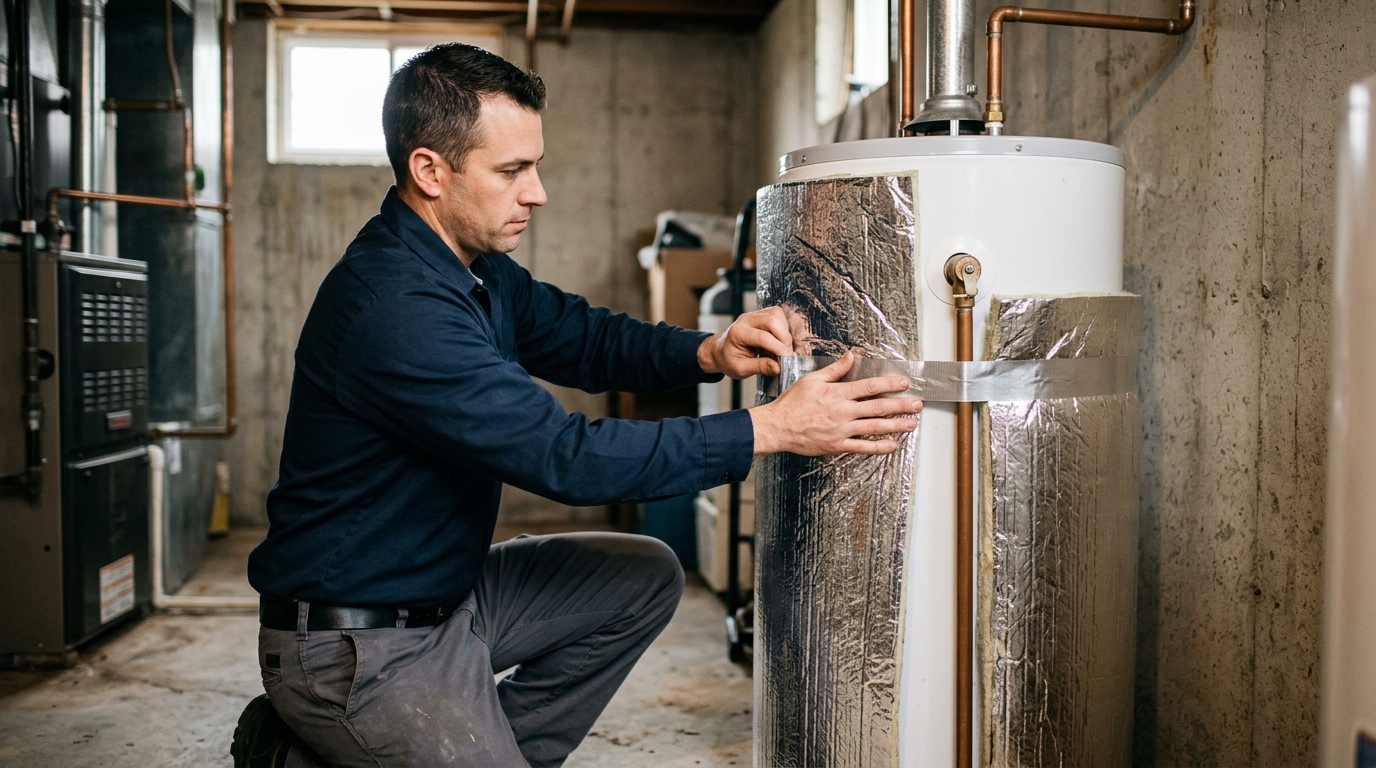
Every month, your water heater quietly burns through energy just keeping stored water hot, and much of that cost escapes as wasted heat through an uninsulated tank and exposed pipes. If your utility bills feel disproportionate to your actual hot water use, water heater insulation is often the overlooked culprit—and the fix. This guide breaks down how insulation works, which tanks benefit most, and the step-by-step methods NECINJ recommends to help New Jersey homeowners cut energy waste and lower costs heading into 2026.
Understanding Water Heater Insulation
How Standby Heat Loss Wastes Energy
Every water heater tank holds hot water even when nobody uses it. That stored heat slowly escapes through the metal tank walls into the room around it. This is called standby heat loss, and it happens around the clock, not just when the tap runs.
Gas and electric heaters both suffer from this drain. A tank sitting in a cold basement loses heat faster than one tucked in a warm closet. That gap forces the heater to cycle on more often, burning extra fuel or electricity just to hold its temperature.
Over a year, standby losses can eat up a meaningful chunk of a household’s water heating costs. Cutting that loss is the whole point of adding insulation, whether the tank already has some built in or needs a boost from an external wrap.
Built-In vs. Add-On Insulation
Newer water heaters usually ship with built-in insulation, foam packed between the tank and its outer shell. Manufacturers rate this with an R-value, a number that shows how well the material resists heat flow. Higher numbers mean better performance.
Older tanks, especially those built before the mid-1990s, often have thin insulation or none at all. For these units, an add-on jacket or blanket wraps around the outside, adding a second layer of protection without replacing the whole appliance.
Add-on insulation works best as a supplement, not a substitute, for a well-built tank. Homeowners weighing upgrades might also review our services to see how insulation pairs with other efficiency projects around the home.
Key Terms Homeowners Should Know
A few terms make shopping easier. R-value measures insulating power. Standby loss means wasted heat between uses. A tank jacket is the fitted wrap installed over an existing heater.
These ideas connect to broader home performance. Just as attic insulation keeps conditioned air from leaking through the roof, water heater insulation keeps stored heat from escaping through metal walls.
Knowing this vocabulary helps homeowners ask sharper questions when comparing products or talking with a technician, so they land on the right fix for their tank and setup.
Why Insulating Your Water Heater Matters
Cutting Monthly Energy Costs
A water heater works around the clock to keep your water hot. Without insulation, heat escapes fast, forcing the unit to run more often. This raises your monthly bill in small but steady amounts. Adding insulation slows that heat loss, so the tank holds warmth longer between cycles.
Homeowners who insulate their tanks often see real savings, especially when paired with other upgrades like showerhead and aerator replacement or attic insulation. These changes work together to reduce overall household energy demand. Curious readers can browse a thread titled Water heater insulation? : r/DIY for real-world experiences from other homeowners tackling this project.
Reducing Your Carbon Footprint
Water heating makes up a large share of home energy use. Every wasted watt means extra fuel burned at a power plant somewhere. Insulating your tank lowers that demand, shrinking your household’s overall energy consumption. It’s a small step, but it supports bigger environmental goals many families care about today.
Pairing insulation with renewable options is another way to cut impact. Some homeowners look into whether are solar panels worth it for their situation, since lower energy demand makes solar systems work harder for you. Together, these choices build a cleaner, more efficient home.
Protecting Your Investment Long-Term
A well-insulated tank runs less often, which eases wear on internal components. Over time, this can stretch the equipment lifespan of your water heater by several years. Less strain means fewer repairs and a lower chance of early replacement.
Many local businesses that handle home appliance replacements note that neglected water heaters fail sooner. Simple steps, like caulking nearby pipes or scheduling light home repair, also help protect your system and your overall investment.
Which Water Heaters Benefit Most
Aging Tanks and Worn-Out Insulation
Older water heaters, especially those over ten years old, often have thin factory insulation that’s broken down over time. Many models built before the mid-2000s used only an inch or two of foam inside the jacket. That thin layer struggles to hold heat, forcing the burner or heating element to run longer and more often.
If your unit is aging, a Water Heater Insulation Wrap can restore lost performance quickly and cheaply. These older tanks see the biggest drop in standby heat loss once wrapped, which makes them the best candidates for this simple upgrade.
Units Located in Cold or Unconditioned Spaces
Water heaters sitting in unheated basements, garages, or crawl spaces lose heat much faster than those in living areas. Cold air around the tank pulls warmth out constantly, even when the unit itself is in good shape. A tank in a 50-degree garage works harder than one in a 70-degree closet.
In these settings, boosting insulation energy efficiency makes a real difference in monthly costs. Pairing a tank blanket with basic weatherstripping or caulking around nearby doors and vents can further cut cold drafts that make the space even harder on your heater.
When Newer Models Don’t Need a Blanket
High-efficiency water heaters built in the last several years often come with thick factory insulation already, sometimes rated R-16 or higher. Adding a blanket to these units does little good and, in some cases, can void the manufacturer’s warranty.
Tankless units and heat pump water heaters also rarely need extra wrapping. If you’re unsure, check your owner’s manual or ask a technician during routine maintenance—the same visit where minor light home repair or a showerhead and aerator replacement might get handled too.
Comparing Types of Insulation Materials
Fiberglass vs. Foam vs. Foil Blankets
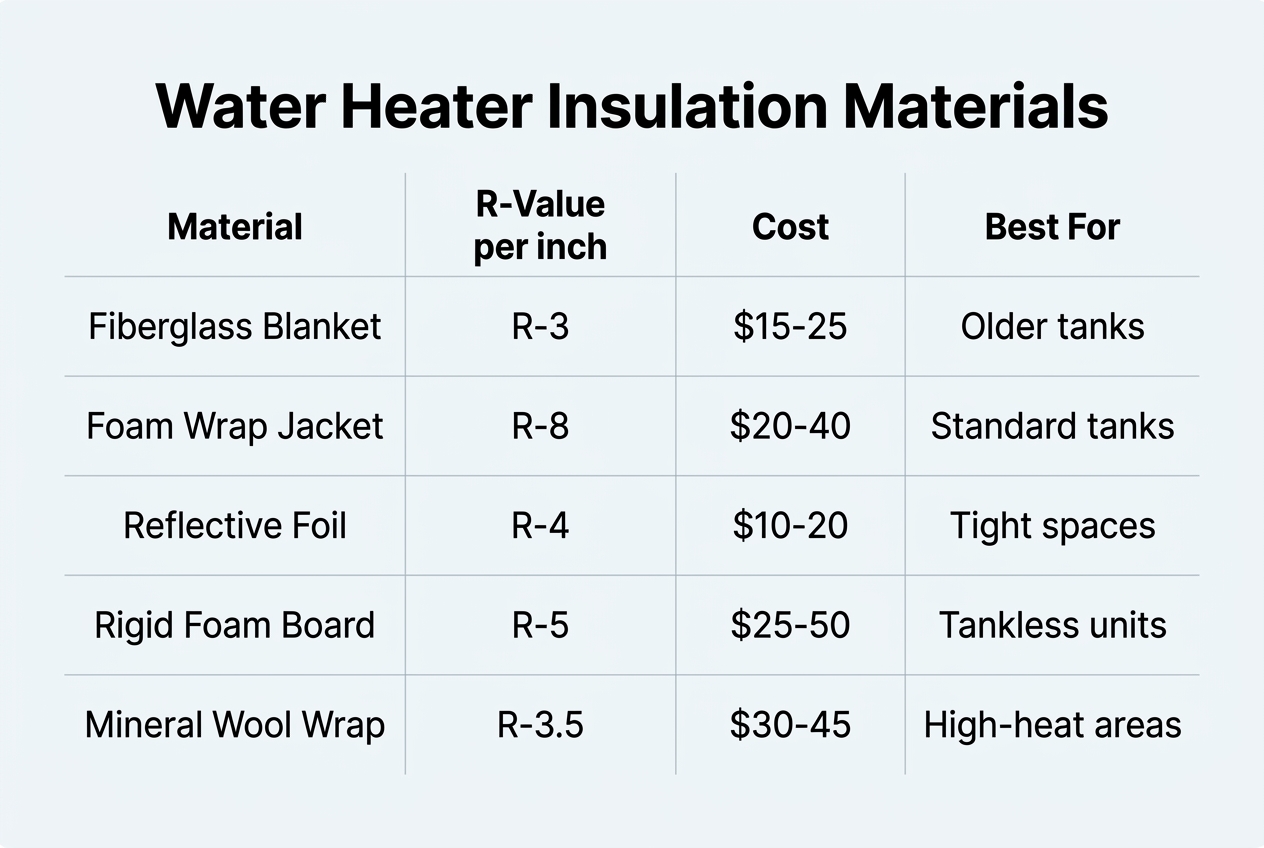
Most water heater wraps use one of three materials. Fiberglass is cheap and easy to find at hardware stores. Foam insulation, often polyethylene, resists moisture well and stays flexible in cold basements. Reflective foil blankets bounce heat back toward the tank instead of soaking it up. Each option works, but performance and safety vary. As explained in Water Heater Insulation: The Key to Energy Efficiency, picking the right material matters as much as installing it correctly.
R-Value and Thickness Comparison
Higher R-value means better heat retention. Thicker material usually scores higher, but bulk can crowd tight utility closets.
| Material | Typical R-Value | Thickness | Moisture Resistance |
|---|---|---|---|
| Fiberglass | R-8 to R-11 | 1–2 inches | Moderate |
| Foam wrap | R-5 to R-8 | 0.5–1 inch | High |
| Reflective foil | R-3 to R-6 | Under 0.5 inch | High |
| Combination blanket | R-10 to R-14 | 1.5–2 inches | High |
Fire-Resistance Standards to Check
Fire safety matters most near gas water heaters. Look for materials rated to ASTM E84 standards, which measure flame spread and smoke. Avoid covering burner access panels or exhaust flues. Homeowners scheduling gas leak repair should mention any nearby insulation upgrades. This same attention to material safety applies elsewhere, including old attic insulation types, some of which no longer meet current fire codes.
How Insulation Reduces Heat Loss
The Science of Trapping Heat
Heat always moves toward cold. This process is called thermal conductivity, and it explains why a metal tank full of hot water constantly loses warmth to a cooler room. Insulation slows that transfer by creating a barrier of trapped air pockets around the tank. Fiberglass, foam, and reflective wraps all work the same basic way: they resist heat flow instead of letting it pass through freely.
Without this barrier, a tank might lose several degrees per hour, forcing the heater to cycle on more often. A wrap rated at R-8 or higher can cut that standby loss significantly. Checking an insulation cost 2026 pricing guide can help homeowners weigh material thickness against expected savings before buying.
Insulating Hot Water Pipes Too
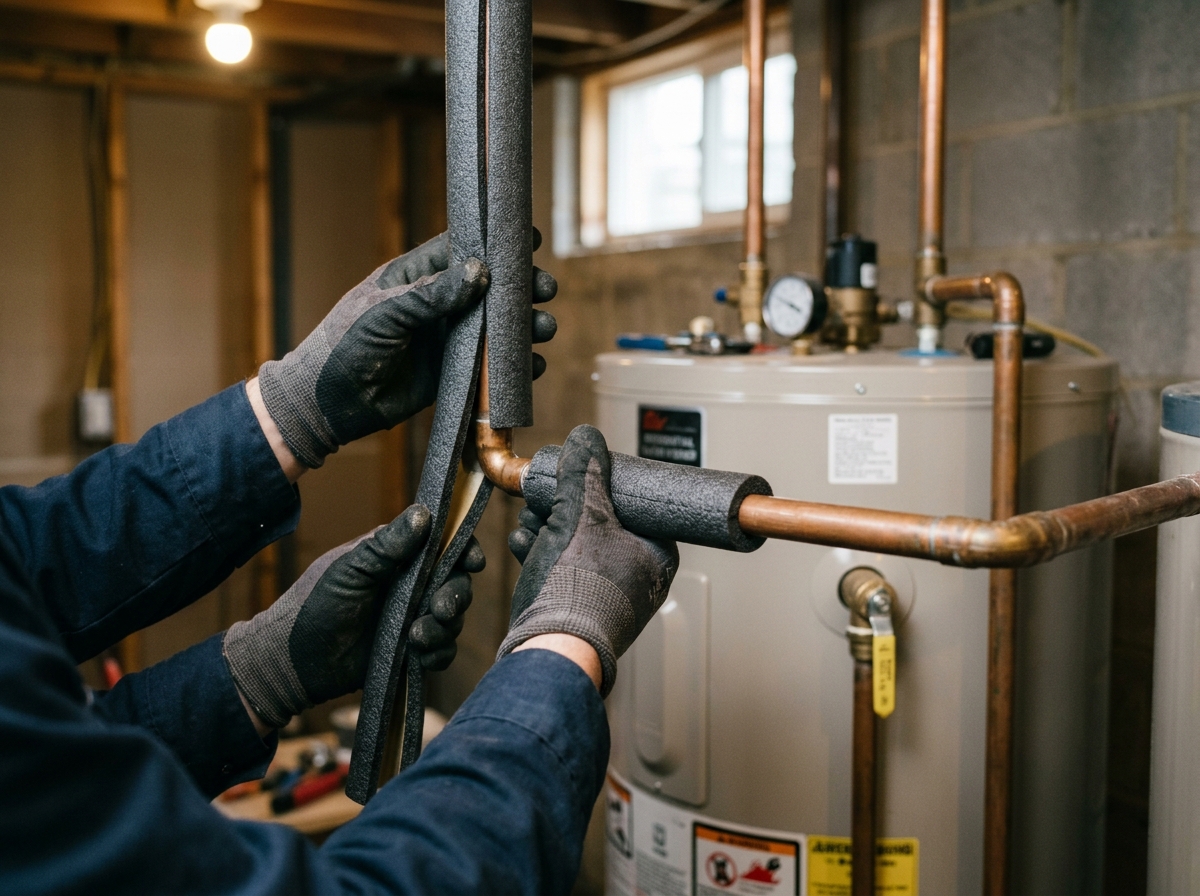
Tank insulation only solves part of the problem. Hot water still travels through exposed pipes before reaching a faucet or showerhead, losing heat along the way. Wrapping the first few feet of pipe near the tank with foam sleeves keeps that heat where it belongs.
This pairs well with other small upgrades, like showerhead and aerator replacement, since less heat loss means water arrives hotter with less waiting. The guide called The Best Water Heater Blankets of 2026, Tested By Our Exp… notes that pipe insulation and tank blankets work best as a combined system, not separate fixes.
Maintaining Consistent Water Temperature
Insulation helps a water heater hold its set temperature between uses. Without it, temperature swings force the thermostat to work harder, wasting energy and shortening equipment life.
Steady temperatures also mean fewer surprise cold showers and less strain on internal components, similar to benefits gained from attic insulation or weatherstripping elsewhere in the home.
Signs Your Water Heater Needs Better Insulation
Warm-to-the-Touch Tank Exterior
Place your hand on the tank’s outer wall. If it feels warm, heat is escaping instead of staying in the water. A well-insulated tank should feel close to room temperature. That warmth means your unit is working overtime just to hold its set temperature, wasting fuel every hour of the day.
Unexplained Spikes in Energy Bills
A sudden jump in your gas or electric bill, with no change in household habits, often points to heat loss. Watch for these common clues:
- Your monthly bill rises by 10% or more compared to the same season last year.
- The water heater runs more frequently, even when nobody is using hot water.
- You’ve already tried simple fixes like caulking, weatherstripping, or LED light bulb replacement without seeing savings.
- A recent energy audit flagged the tank as an area of concern.
Inconsistent or Slow Hot Water Delivery
Longer wait times at the faucet or shower can signal heat loss along the tank and pipes. Pairing better insulation with a Water Heater Blanket often fixes this quickly. For whole-home efficiency, review the attic insulation vacuum necinj guide as a next step.
Step-by-Step: Installing a Water Heater Blanket
Measuring and Choosing the Right Size
Start by measuring your tank’s height and circumference. Most blankets fit tanks between 40 and 60 gallons, but always check the label before buying. A popular option, the Frost King Fiberglass Water Heater Insulation Blanket, lists exact coverage dimensions on its packaging.
Safety Precautions Before You Start
Always cut power or gas before touching the tank. Electric units need the breaker switched off; gas units need the control set to “pilot” or off entirely. If you smell gas at any point, stop and consider professional gas leak repair before continuing.
The table below outlines the basic installation sequence, so you can track your progress step by step.
| Step | Task | Time Needed |
|---|---|---|
| 1 | Measure tank height and circumference | 5 minutes |
| 2 | Turn off power or gas supply | 2 minutes |
| 3 | Wrap blanket around tank | 10 minutes |
| 4 | Cut openings for vents and valves | 15 minutes |
| 5 | Secure with tape and restore power | 5 minutes |
Fitting the Blanket Around Vents and Controls
Carefully cut openings around the temperature control panel, pressure relief valve, and any gas vents. Never cover the burner compartment or exhaust flue on gas models. This keeps the ventilation clear and the unit safe.
DIY Installation vs. Professional Service
Cost and Time Tradeoffs
A DIY kit costs less upfront, but a professional visit adds inspection and safety checks. The table below compares typical options homeowners consider.
| Option | Average Cost | Time Needed | Includes Safety Check |
|---|---|---|---|
| DIY blanket kit | $25–$40 | 30–45 minutes | No |
| Professional installation | $75–$150 | 20–30 minutes | Yes |
| Full energy audit + insulation | $150–$300 | 1–2 hours | Yes, whole-home |
| Comfort program (income-eligible) | Free | 1–2 hours | Yes |
Common DIY Mistakes and Safety Risks
Gas water heaters need airflow around the burner and exhaust vent. Covering these spots by mistake can cause carbon monoxide buildup. Some homeowners also block the thermostat access panel, making future repairs harder. The Frost King Vinyl Insulation Blanket for Gas Water Heater … includes cutout guides, but skipping them creates real hazards. Improper insulation on gas units is a serious safety risk, not just a performance issue.
What a Professional Energy Assessment Adds
A trained technician checks combustion venting, water temperature, and pipe insulation together. This broader view often turns up issues like drafty attics or old appliances needing attention. Many local businesses pair this service with caulking, weatherstripping, or attic insulation for bigger savings. Pairing insulation work with energy saving tips for summer can stretch those savings across the whole year.
Choosing the Right Insulation for Your Home
Sizing Insulation to Your Tank
Not every blanket fits every tank. A proper fit matters more than most homeowners realize. A 40-gallon tank needs a different wrap size than an 80-gallon unit, and tight utility closets may call for slimmer materials.
- Measure tank height and circumference before buying any wrap or jacket.
- Choose thinner insulation for closets or tight alcoves where clearance is limited.
- Select higher R-value blankets for tanks in unheated basements or garages.
- Check that the material allows easy access to drain valves and inspection panels.
- Avoid oversized blankets that bunch up and leave gaps near the tank base.
Special Considerations for Gas Units
Gas water heaters need extra caution. Insulation must never cover the burner compartment, thermostat, or exhaust flue. Blocking airflow can create dangerous conditions. Electric units have fewer restrictions since there’s no combustion involved. If you’re unsure whether your gas connections are sound, pair insulation upgrades with a professional gas leak inspection first. Homeowners updating older appliances might also consider home appliance replacements alongside insulation work for better long-term efficiency.
Climate and Location-Based Recommendations
Local conditions matter too. A damp, unheated basement in northern New Jersey loses heat faster than a warm interior closet. Cold, drafty spaces benefit from thicker insulation, sealed with quality caulking around nearby pipes. Combining this with attic insulation and weatherstripping creates a more consistent home temperature overall. For a broader efficiency check, some homeowners turn to resources like The Curtain for additional guidance on seasonal home performance.
Programs and Rebates for Energy-Efficient Upgrades
Free Services for Qualifying Households
New Jersey’s Comfort Partners Program offers free weatherization help to income-eligible renters and homeowners. Qualifying households may receive water heater insulation, weatherstripping, caulking, and even LED light bulb replacement at no cost. These upgrades target the biggest sources of wasted energy in a home.
Eligibility usually depends on household income and utility provider. Many families who qualify never realize help is available. A quick call to a local energy office or utility company can confirm eligibility within minutes.
These programs often bundle small repairs with insulation work. A technician might tighten a loose showerhead, check for a gas leak, or handle light home repair items during the same visit. That makes each session more valuable and cuts down on separate appointments.
Bundling Insulation With a Home Energy Audit
A professional energy audit measures where a home loses heat and money. Auditors use blower door tests and infrared cameras to find gaps around attic insulation, ductwork, and water heaters. This data shows exactly which upgrades matter most.
Homeowners often discover that insulation gaps account for a large share of energy loss. An audit might reveal that a water heater is losing heat faster than expected, or that attic insulation has settled over time. These findings guide a clear, prioritized plan for tackling projects that boost energy efficiency.
Maximizing Savings With Multiple Upgrades
Combining several upgrades in one project often saves more than tackling them separately. Pairing water heater insulation with showerhead and aerator replacement, for example, cuts both heat loss and water use at the same time.
Many local businesses also recommend appliance replacements alongside insulation work when equipment is aging. Older water heaters paired with new insulation and updated aerators can lower utility bills by a noticeable margin, often within the first billing cycle after installation.
Frequently Asked Questions About Water Heater Insulation
Does Insulation Void My Warranty?
Most manufacturers allow an insulating blanket without voiding coverage. Check your paperwork first, since a few brands ask installers to leave the top and access panels uncovered. This small step protects your warranty while still cutting heat loss. If you’re unsure, a quick call to the manufacturer clears up any confusion before you buy materials.
How Long Does a Blanket Last?
A quality blanket typically lasts eight to ten years before it compresses or tears. Watch for these signs it needs attention:
- The material feels thin or flattened compared to when it was installed.
- Straps or tape have loosened, letting the cover slip out of place.
- You notice moisture trapped inside, which can signal a leak needing repair.
- The tank surface feels warmer than usual through the insulation layer.
- Seams have separated, exposing bare metal to surrounding air.
Replacing it costs little compared to the ongoing savings it provides.
Is Insulation Safe for Gas Water Heaters?
Yes, but placement matters. Never cover the thermostat, burner compartment, or exhaust flue on a gas unit. Electric heaters have more flexibility since there’s no combustion venting to protect. Homeowners pairing this upgrade with other work, like gas leak repair or light home repair, should schedule a professional inspection first. You can learn more about us and how our technicians evaluate these details safely.
If your water heater feels warm to the touch or you’re noticing higher energy bills, it might be time for a proper insulation check. NECINJ, Northeast Energy Conservation, Inc., offers expert energy audits and insulation services, and through the New Jersey Comfort Partners Program, income-eligible customers can even receive these upgrades free of charge. Reach out to NECINJ today to book an audit and see how much more comfortable and efficient your home can be.
