



If your baseboard heaters are running nonstop while your energy bills climb higher every winter, you’re not imagining the problem. Outdated units can waste a lot of electricity while leaving rooms unevenly heated. The good news? Energy efficient baseboard heaters have come a long way, and they now offer homeowners real ways to cut costs without giving up comfort. This guide walks through what makes modern models perform better, how to pick the right system for your home, and which upgrades actually pay off in 2026 and beyond.
How Baseboard Heating Works
Electric resistance baseboard basics
Electric baseboard heaters use metal coils inside a long, low unit. Electricity passes through the coils, and they heat up fast. That heat transfers into metal fins, which warm the air around them. No furnace. No ductwork. No pilot light.
Each unit works alone, controlled by its own thermostat. That means every room can sit at a different temperature. A bedroom can stay cool while a bathroom stays warm. This zone control is one reason homeowners exploring projects to improve energy efficiency often start here.
Hydronic (liquid-filled) baseboard basics
Hydronic baseboard heaters work a bit differently. Inside the unit, a sealed tube holds water or a special oil. An electric element heats this liquid, and the liquid holds that heat for a long time.
Because liquid retains warmth so well, the unit keeps radiating heat even after the element shuts off. That creates steadier temperatures with fewer sharp swings. Rooms stay warm longer between cycles, which can cut down how often the thermostat kicks the system back on.
How heat circulates through a room
Both baseboard types rely on convection. Cool air near the floor gets pulled into the unit, warms against the coils or liquid tube, then rises. It spreads across the ceiling, cools, and sinks back down along outer walls and windows.
That constant loop is why baseboards sit under windows, where cold air naturally drops. Gaps around those same windows often let heat escape, so sealing them with caulking or weatherstripping matters. One homeowner asking online, “I need energy efficient baseboard heaters, contractor …”, learned that circulation only works well when the room itself holds heat properly, starting with attic insulation.
Electric vs. Hydronic: Choosing Energy Efficient Baseboard Heaters
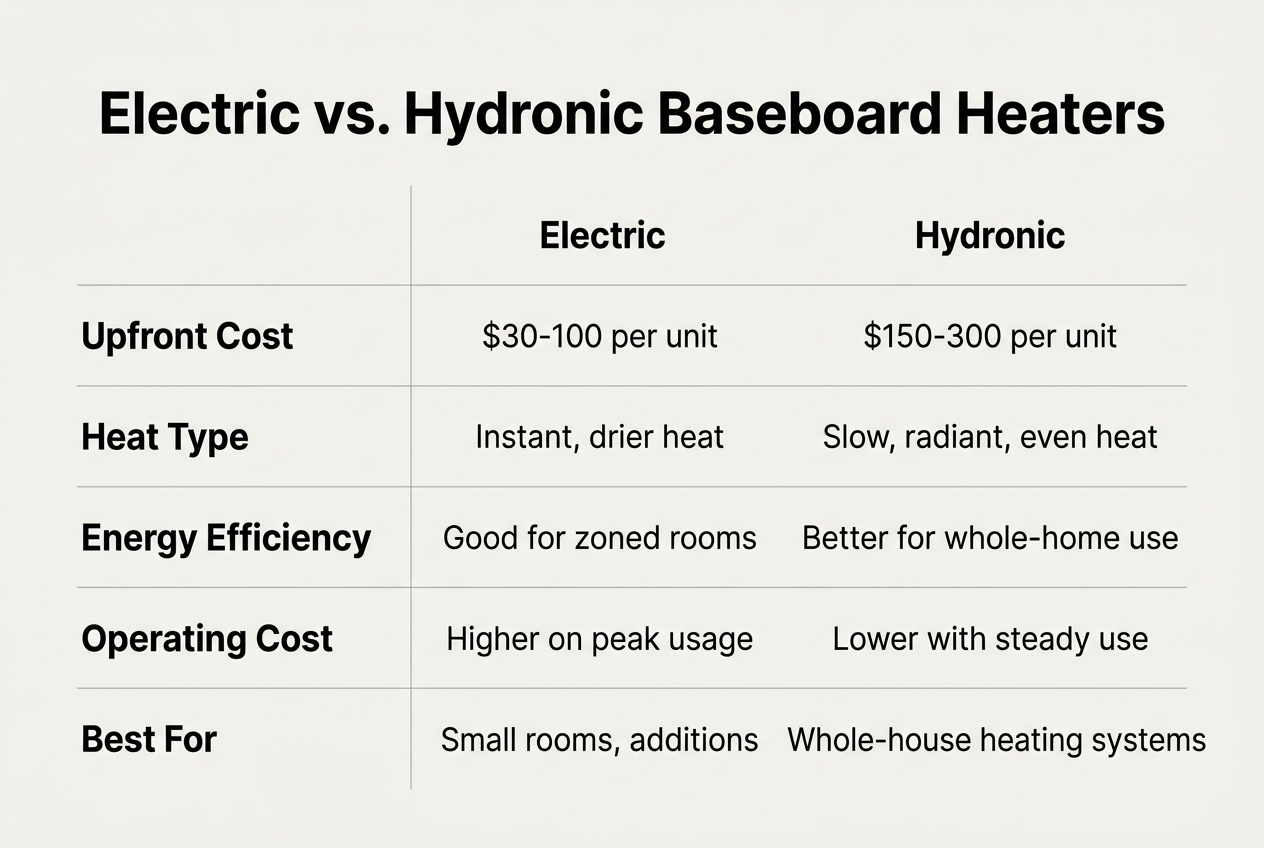
Choosing between electric and hydronic models comes down to budget, climate, and how your home is built. The table below lays out the key differences side by side.
| Feature | Electric Baseboard | Hydronic Baseboard |
|---|---|---|
| Upfront cost per unit | $50–$150 | $150–$300 |
| Installation complexity | Simple wiring, quick setup | Requires plumbing, boiler tie-in |
| Heat-up time | Fast, few minutes | Slower, retains heat longer |
| Average lifespan | 15–20 years | 20–30 years |
| Typical energy loss | Higher, cools quickly | Lower, steady heat output |
Upfront cost and installation differences
Electric units cost less and go in faster. Most electricians finish a room in a single afternoon. Hydronic systems need pipes, a boiler connection, and more labor. That raises the price tag but adds long-term value.
Efficiency ratings and energy consumption
Electric heaters turn almost all their energy into heat, but that heat fades fast. Hydronic systems hold warmth in liquid-filled fins, so they cycle less often. This steady heat often means lower bills over a full winter. Reviewing our services can help you compare options based on your home’s layout.
Lifespan and durability comparison
Hydronic baseboards typically outlast electric models by a decade or more. Fewer moving parts mean less wear. For homeowners weighing long-term durability, this guide on 4 Reasons to Switch to Hydronic Baseboard Heaters offers useful detail. Either choice pairs well with attic insulation and weatherstripping for maximum energy savings.
Comfort and Air Quality Benefits
Maintaining even, balanced room temperatures
Baseboard heaters warm rooms from the floor up. Cold air near windows and doors gets drawn in, heated, and pushed back into the room. That creates a steady, even temperature instead of hot blasts followed by cold spells.
Hydronic models hold heat inside their fluid-filled channels. They keep releasing warmth even after the thermostat cycles off. That slow, steady release means fewer temperature swings between rooms. A bedroom at the end of the hall stays as comfortable as the living room near the thermostat.
This balance also cuts the urge to crank the heat higher than needed, which supports lower bills. Homeowners weighing bigger efficiency upgrades sometimes ask whether are solar panels worth it for offsetting heating costs alongside these systems.
Reduced dust circulation for allergy sufferers
Forced-air furnaces push air through ducts, stirring up dust, pet dander, and pollen along the way. Electric baseboard heaters and hydronic units skip the ductwork entirely, so far less debris circulates through the home.
This matters for people with asthma or seasonal allergies. Less airborne dust means fewer triggers during winter, when windows stay shut for weeks at a time.
Pairing baseboard heat with attic insulation and caulking around windows further limits outside allergens from sneaking in, giving sensitive household members cleaner air to breathe all season.
Quieter operation compared to forced air
Furnaces cycle on with a noticeable rumble, followed by blower noise that continues until the cycle ends. Baseboard units run almost silently, with no fan and no ductwork rattling.
This quiet operation suits bedrooms, nurseries, and home offices where sudden noise is disruptive. Many local businesses recommend this style for light sleepers or households with young children.
Combined with other small upgrades, like LED light bulb replacement or weatherstripping, a quieter heating system rounds out a home that feels calmer and more comfortable year-round.
Safety Considerations for Homes with Kids and Pets
Surface temperature and burn risk
Baseboard heaters can reach surface temperatures above 150 degrees Fahrenheit during normal operation. That’s hot enough to burn skin within seconds of contact. Curious toddlers, crawling babies, and pets that brush against units face the biggest risk. Hydronic models tend to run cooler than electric resistance units, which matters in homes with young children or older pets that move slowly.
Safety guards and covers
Modern units include design features that lower risk without sacrificing warmth. When shopping for a replacement, compare models like the Highly Rated – Baseboard Heaters line, which includes options built with safety in mind. Look for these protective features before buying:
- Cool-touch housings that keep exterior panels well below scald-risk temperatures even during long heating cycles;
- Rounded corners and enclosed heating elements that reduce the chance of pinched fingers or paws;
- Tip-over or overheat shutoff switches, especially important for portable electric units near active kids;
- Childproof covers or grilles that block direct contact while still allowing airflow;
- Tamper-resistant thermostat controls that prevent little hands from adjusting settings unsupervised.
Placement tips to reduce hazards
Keep furniture, bedding, and toys at least 12 inches from any unit. Avoid placing heaters near play areas, crib zones, or pet beds. Many local businesses that handle light home repair can also help secure loose cords or relocate furniture safely. While reviewing whole-home safety, it’s worth revisiting energy saving tips for summer so heating and cooling habits stay consistent year-round.
Pros and Cons of Baseboard Heating Systems
Every heating system has strengths and weaknesses. The table below offers a balanced breakdown to help you weigh tradeoffs before buying.
Advantages of baseboard heat
Baseboard heaters cost less upfront than furnaces or heat pumps. They run quietly, need little maintenance, and let each room control its own temperature. Many homeowners like the simplicity. There’s no ductwork to clean or repair, unlike forced-air systems.
Drawbacks and limitations
Electric models can raise monthly bills, especially in older or poorly insulated homes. Heat rises slowly and unevenly compared to forced air. Furniture placement matters too, since blocked units waste energy. For details on cost concerns, this guide on Electric Baseboard Heating is Expensive: See Your … breaks down real numbers.
Situations where baseboard heat isn’t ideal
Large open floor plans lose efficiency fast with baseboard units. Homes with poor attic insulation or drafty windows waste heat before it ever warms the room. Caulking and weatherstripping help, but leaky homes often need bigger upgrades first.
| Factor | Pro | Con |
|---|---|---|
| Installation cost | Low, often under $500 per unit | Multiple units add up quickly |
| Operating cost | Efficient in small, well-sealed rooms | Higher bills in drafty homes |
| Heat distribution | Consistent room-by-room control | Slower, uneven whole-house heating |
| Maintenance | Minimal upkeep required | Dust buildup reduces output |
Weighing these factors early sets realistic expectations. To learn more about the team behind this guidance, visit our about us page.
Comparing Baseboard Heaters to Heat Pumps
Operating cost differences
Baseboard heaters use electric resistance heat, which converts nearly all incoming electricity into warmth. Sounds efficient, but it comes at a price. A heat pump moves existing heat instead of creating it, often producing two or three units of warmth for every unit of electricity used. Over a New Jersey winter, that gap can mean hundreds of dollars saved.
Homeowners comparing utility bills often notice baseboard heat costing more per month, especially during long cold stretches. This is exactly why some energy advocates point to The Problem with electric furnaces and baseboard heating when discussing long-term operating costs. Baseboards still make sense for small spaces or backup heat, but whole-house use adds up fast.
Climate and insulation factors
A heat pump’s efficiency depends heavily on outdoor temperature and how well a home holds heat. Older, drafty homes lose warmth quickly, forcing any heating system to work harder. Attic insulation, caulking, and weatherstripping all help either system perform better and cost less to run.
In tightly sealed, well-insulated homes, heat pumps often beat baseboards on comfort and cost. In leaky older homes, that advantage shrinks unless insulation upgrades happen first. Reviewing a provider’s privacy policy before scheduling a home energy assessment can offer peace of mind when sharing home details online.
When a heat pump makes more sense
Heat pumps typically make sense for whole-house heating, larger homes, or households aiming to cut long-term electric bills significantly. They also pair well with other upgrades, like efficient appliance replacements, since both systems benefit from smarter overall energy use.
Baseboards still suit single rooms, additions, or homes needing simple, low-cost backup heat.

Steps to Install or Upgrade Your Baseboard Heaters
Sizing your heater to the room
Correct sizing prevents wasted energy and uneven heat. A unit that’s too small runs constantly. A unit that’s too big cycles on and off, wasting power. Measure square footage, ceiling height, and window area before buying. A professional energy audit, similar to the process described in Energy Efficient Electric Baseboard Heat: Complete 2025 …, can confirm the right wattage for each room.
Choosing the right thermostat controls
Smart or programmable thermostats improve control and cut costs. Look for models with individual room settings, since baseboard systems heat zone by zone. Digital controls also help track usage patterns over time.
Hiring a qualified installer
Installation involves wiring, load calculations, and safety checks best left to trained technicians. Before scheduling work, homeowners should:
- Confirm the installer checks electrical panel capacity to avoid overload issues.
- Ask whether they inspect wall insulation quality near heater placement zones.
- Request a written estimate that includes labor, materials, and permit costs.
- Verify they coordinate related upgrades, such as caulking or weatherstripping, for tighter rooms.
- Check references from recent baseboard heater installation projects.
For guidance on finding qualified help, review the contacts page before starting any project.
Maximizing Efficiency and Lowering Heating Bills
Sealing drafts and improving insulation
Baseboard heaters work best when the heat they make actually stays put. Air leaks around windows, doors, and outlets let warmth escape fast. Caulking gaps around window frames and weatherstripping door edges are simple fixes. Most homeowners finish both jobs in an afternoon, with materials costing under fifty dollars.
Attic insulation matters just as much. Heat rises, and a poorly insulated attic can lose up to 25 percent of a home’s warmth. Adding or upgrading insulation keeps rooms comfortable and cuts down how often heaters cycle on. This single upgrade often delivers the fastest payback of any efficiency project.
Small repairs add up too. Loose baseboards, gaps in flooring, or drafty electrical panels all let cold air creep in. Light home repair work, paired with sealing efforts, creates a tighter building envelope. For more seasonal tips, many homeowners check a trusted blog before starting projects themselves.
Smart thermostats and zoning strategies
Zoning lets each room run at its own temperature. Bedrooms can stay cooler at night while living areas stay warm during the day. This targeted approach avoids heating empty spaces and can trim monthly bills noticeably.
Smart thermostats add another layer of control. Programmable schedules lower heat automatically when residents leave for work or sleep. Some models learn patterns over time, adjusting without manual input. Pairing zoning with smart controls often reduces heating costs by 10 to 15 percent annually.
Routine maintenance and cleaning tips
Dust and debris inside baseboard fins block airflow and force units to work harder. Vacuuming fins twice a season keeps heat output steady. Straightening bent fins with a butter knife restores efficiency instantly.
Checking wiring, testing thermostats, and confirming units click on properly prevents small issues from becoming costly repairs. Combined with broader upgrades like appliance replacements, these habits support long-term home energy conservation.
Rebates, Programs, and Assistance for Efficient Heating Upgrades
Home energy audits and their role
A professional energy audit shows exactly where your home loses heat. Technicians use blower-door tests and infrared cameras to spot drafts, gaps, and weak insulation. Many homeowners are surprised to learn their attic, not their heater, causes the biggest energy loss.
An audit also checks safety issues, including gas leak repair needs, before any heating upgrade begins. Auditors often recommend simple fixes like caulking, weatherstripping, and attic insulation alongside baseboard improvements. These small steps can cut heating costs by 10 to 20 percent. Reviewing a company’s past work, including a detailed portfolio, helps you understand what a thorough audit and follow-up plan actually looks like.
Scheduling a professional evaluation before buying new heaters ensures you invest in the right size and type of system for your home’s actual needs.
Income-eligible assistance programs
New Jersey offers assistance programs that provide free energy services to qualifying households. These programs often cover home energy audits, weatherstripping, and even appliance replacements at no cost. Eligibility usually depends on household size and income, similar to guidelines used for other utility assistance.
Beyond heating upgrades, these programs sometimes include showerhead and aerator replacement or LED light bulb replacement, cutting overall utility bills. Many local businesses partner with state agencies to deliver these services directly to homes. Applying is straightforward, and support staff can walk families through required paperwork and documentation.
State and utility rebate opportunities
State and utility rebate programs reward homeowners who upgrade to efficient heating systems. Rebates often range from $50 to several hundred dollars, depending on equipment type and efficiency rating. Utility companies frequently update these offers each season, so timing matters.
Combining rebates with light home repair or insulation upgrades stretches savings further. Checking current utility websites before purchasing new baseboard heaters ensures you don’t miss available incentives tied to specific models or installation dates.
Frequently Asked Questions About Baseboard Heating
Are baseboard heaters expensive to run?
Running costs depend on insulation, unit type, and how often you use them. Electric baseboard heat costs more per hour than hydronic systems, but smart thermostats and zoning help keep the bill in check. Homes with fresh attic insulation or new caulking around windows often see lower usage right away.
Can baseboard heaters be combined with other heating systems?
Yes. Many homeowners pair baseboard units with a primary furnace or heat pump. This setup supports zone heating in rooms that need extra warmth. Consider these common combinations:
- Baseboard heaters in a finished basement paired with a forced-air furnace upstairs for balanced comfort.
- Hydronic baseboard loops connected to a boiler that also supplies domestic hot water.
- Electric baseboard units as backup heat in rooms served by a heat pump during extreme cold.
- Baseboard heat in a sunroom or addition where extending existing ductwork isn’t practical.
Before adding a system, browse a gallery of completed heating projects for placement ideas.
How long do baseboard heaters typically last?
Most electric baseboard heaters last 15 to 20 years with basic care. Hydronic models often last longer, especially with regular maintenance. Watch for these signs it’s time to consider replacement:
- Uneven heat output across the length of the unit despite a clean interior.
- Rattling, ticking, or humming noises that persist after tightening covers.
- Rising energy bills without a change in usage habits or weather patterns.
Before committing to new ductwork or a duct cleaning appointment, it’s worth asking how much of the air you’re paying to heat and cool is actually escaping through the ducts versus slipping out around window frames, door thresholds, and an under-insulated attic floor. A duct specialist can measure leakage in the system itself, and that’s genuinely useful information — but so is knowing whether caulking, weatherstripping, and added attic insulation would close the same comfort gap for considerably less. The most honest answer usually comes from looking at the whole house first, then deciding which fix earns your money.
