


When your attic fan suddenly falls silent—or worse, runs constantly without cooling anything—the culprit is often a failing motor rather than the entire unit. Yet many homeowners assume a costly full replacement is their only option. Understanding attic fan motor replacement can save you hundreds of dollars while restoring the ventilation your home needs to prevent heat buildup, moisture damage, and soaring energy bills. This 2026 guide walks New Jersey homeowners through diagnosing motor failure, picking the right replacement part, and deciding when a DIY fix makes sense versus calling in a pro.
How Attic Ventilation Fans Work
Types of Attic Fans (Roof, Gable, Solar)
Roof-mounted fans sit on the roof deck and pull hot air straight up and out. Gable fans mount on the attic’s end wall and push air out sideways, often working with existing vents. Solar-powered fans use small rooftop panels, so they need no wiring and cost little to run.
Each type shares the same goal: remove trapped heat and moisture before damage happens. Roof fans usually move more air, sometimes 1,000 to 1,600 cubic feet per minute. Gable fans work well in older homes with existing gable vents. Solar units suit homes without easy attic wiring access.
Why Motors Are the Component Most Likely to Fail
The motor is the fan’s engine. It spins the blade that pulls hot air through the attic and pushes it outside. This constant spinning, often for hours a day in summer, wears down bearings and windings over time.
Attic temperatures can top 140 degrees Fahrenheit. That heat stresses motor parts far more than typical household appliances face. Dust, humidity, and age also shorten motor life. That’s why homeowners hunting for lasting fixes often watch guides like How to replace an Attic Fan Motor #DIY #Attic #savemoney before tackling the job themselves.
How Ventilation Impacts Cooling Costs
A working attic fan keeps heat from soaking into ceilings below. This reduces strain on air conditioners and lowers monthly bills. Poor ventilation forces cooling systems to work harder, much like a leaky duct or worn showerhead wastes energy elsewhere in the house.
Many local businesses recommend pairing fan repairs with broader upgrades. Combining ventilation fixes with attic insulation, weatherstripping, and other projects to improve energy efficiency creates lasting savings across the whole home.
Signs You Need Attic Fan Motor Replacement
Common Failure Symptoms
Some warning signs are easy to spot once you know what to check. A failing motor rarely dies without a hint first. Watch for these clues before the whole system quits during a heat wave.
- The fan blade sits still while you hear a steady humming sound coming from the motor housing.
- A burning smell drifts near the attic access panel, which often means overheated wiring or worn bearings.
- The fan cycles on and off rapidly instead of running for a normal stretch of time.
- Grinding, rattling, or squealing noises replace the usual quiet whir of a healthy fan.
- The fan runs constantly, even on cooler days, suggesting a stuck or failing thermostat switch tied to the motor.
Motor Lifespan Expectations
Most attic fan motors last 10 to 15 years under normal conditions. Heat, dust, and moisture shorten that window. A motor pushing past 12 years deserves closer attention, even without obvious symptoms. For quality replacement parts, browsing options like Attic Fan Motors – Dayton, Broan and Lomanco shows how much lifespans and warranties vary across brands.
When Noise Means Trouble
Not every strange sound points to the motor. Wiring faults often cause clicking without movement, while thermostat failures cause fans to never start at all. A true motor issue usually includes heat, vibration, or a burning odor. If you’re unsure, review these energy saving tips for summer to understand how ventilation problems affect comfort and cooling costs.
Diagnosing a Faulty Attic Fan Motor
Testing Power and Thermostat Function
Before buying parts, confirm the fan is actually getting power. Check the breaker panel first, since a tripped breaker is a common culprit. Next, find the thermostat control, usually mounted near the fan housing, and turn the dial to its lowest setting to force the fan on manually.
If the fan stays silent, the thermostat itself may be faulty rather than the motor. Many homeowners replace an entire unit when only a $15 thermostat needed swapping. Testing this first can save real money and time during diagnosis.
Attic temperatures often exceed 120 degrees in summer, so schedule testing during cooler morning hours. Bring a flashlight, work gloves, and sturdy footwear, since attic flooring is often just exposed joists and insulation.
Checking for Seized Bearings or Burnt Windings
With power confirmed, try spinning the fan blade by hand. A seized bearing will feel stiff, gritty, or completely frozen. This usually signals wear beyond simple repair, meaning a full motor replacement is likely needed rather than lubrication alone.
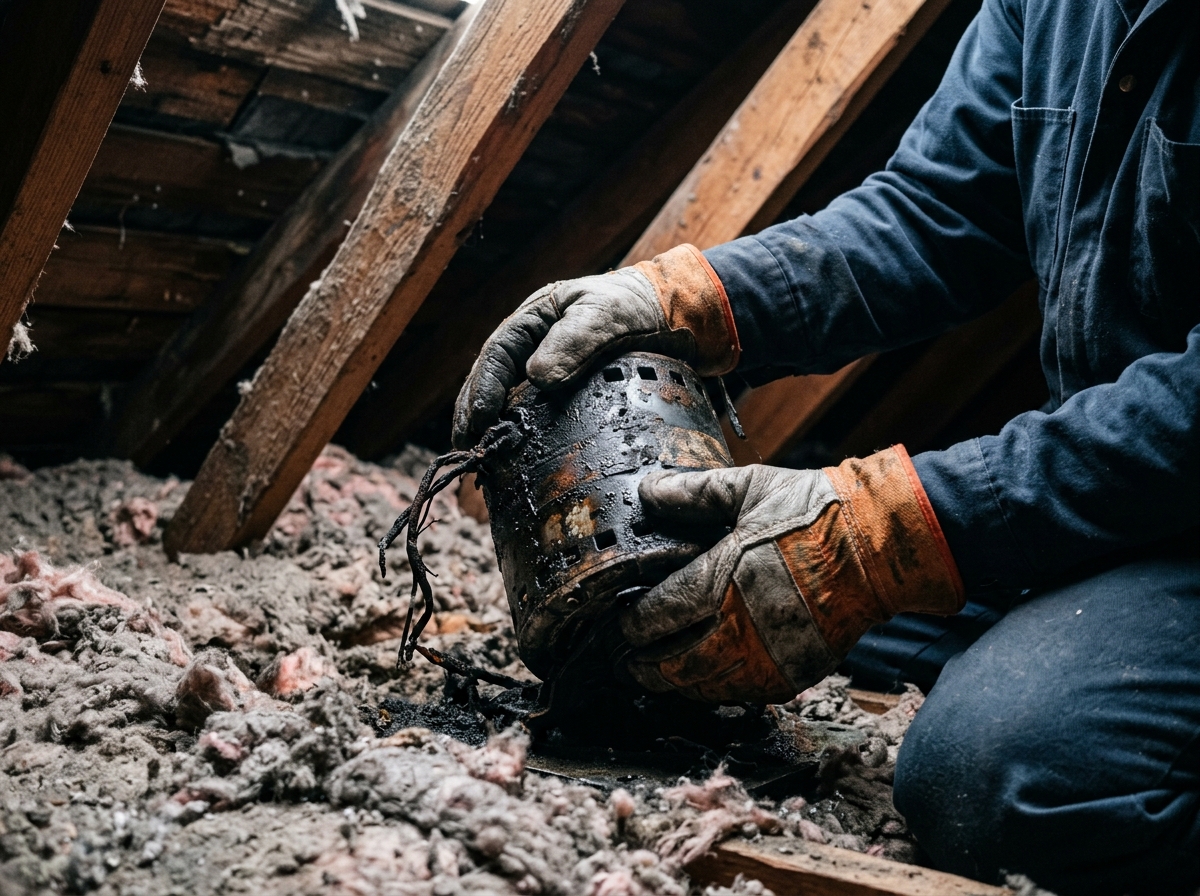
Smell the motor housing for a burnt or acrid odor, which points to scorched windings inside the motor coil. Discoloration around the motor casing or visible soot are more warning signs. These symptoms typically mean internal wiring has failed and can’t be safely repaired.
If shopping for parts becomes necessary, browsing an Attic Fan Motor listing helps homeowners compare horsepower, voltage, and mounting specs before buying.
Multimeter Testing Basics
A multimeter set to the ohms function tests motor windings for continuity. Touch the probes to the motor’s wire leads; a reading of infinity or zero often confirms a dead winding. This simple $20 tool cuts out the guesswork during diagnosis.
Always disconnect power at the breaker before touching any wiring. Attic work near electrical components carries real risk, so treat every wire as live until confirmed otherwise. Wear insulated gloves and avoid kneeling on wet insulation.
Homeowners uncertain about electrical testing should call a professional rather than risk injury. The same caution applies to related projects like gas leak repair or other light home repair tasks involving utilities. For broader efficiency questions, some homeowners also ask whether are solar panels worth it alongside attic ventilation upgrades.
Attic Fan Motor Replacement: Costs, Specs, and What to Expect
Common Motor Specifications (HP, RPM, Voltage)
Most residential attic fan motors fall within a narrow range of specs. Knowing these numbers helps you avoid buying the wrong part. The table below shows typical specifications across common household models.
| Motor Type | Horsepower | RPM | Voltage |
|---|---|---|---|
| Standard gable fan | 1/8 HP | 1,100 | 120V |
| Roof-mounted fan | 1/6 HP | 1,050 | 120V |
| Whole-house fan | 1/3 HP | 1,725 | 120V/240V |
| Solar-assisted fan | 1/10 HP | 1,500 | 12V DC |
DIY vs Professional Cost Comparison
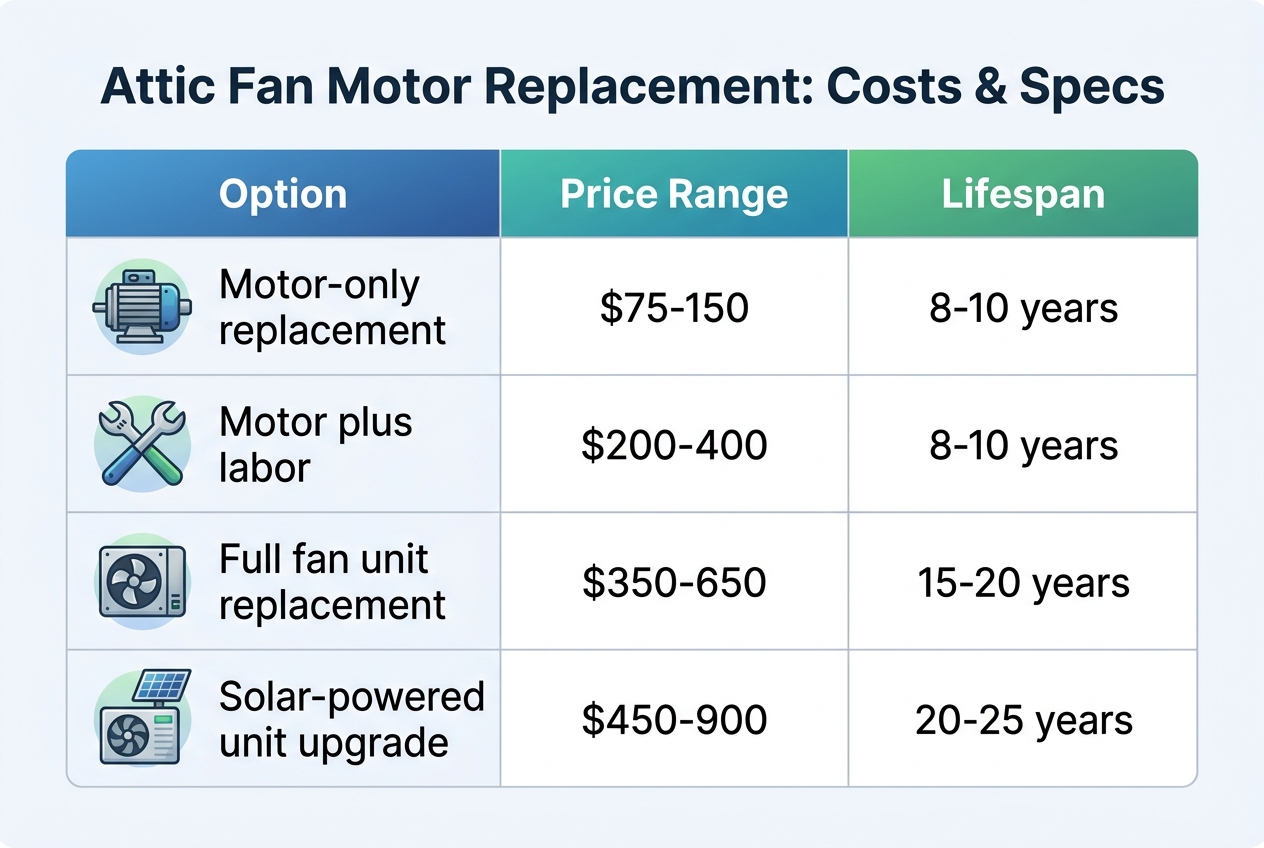
A replacement motor alone typically costs $40 to $150. Professional installation adds $75 to $200 in labor, bringing the total project cost to $115 to $350. DIY saves money but requires comfort with electrical wiring and attic access.
OEM vs Universal Replacement Motors
OEM motors match your fan’s original specs exactly and often carry a one-year warranty. Universal motors cost less but may need adapter brackets and offer shorter coverage. Many local businesses stock both options, and browsing Attic Fan Replacement Parts can clarify which fits your unit. If ventilation problems go beyond the motor, exploring our services may reveal related energy-saving upgrades worth considering.
Choosing the Right Replacement Motor
Matching Diameter and Mounting Style
Before buying a new motor, measure the old one carefully. Diameter, shaft length, and mounting bracket style all need to match the original setup. A motor that’s slightly too wide won’t fit inside the housing, and a mismatched bracket can cause vibration or noise.
CFM rating matters just as much as size. This number tells you how much air the fan moves per minute. Choose a motor with too low a CFM rating and your attic stays under-ventilated, even if the fan runs perfectly. Too high, and you may strain the housing or blades. Many homeowners browse options like Gable Vent Fan Motors at Lowes.com to compare specs side by side before buying.
Single-Speed vs Two-Speed Motors
Single-speed motors are simple and affordable. They run at one constant rate whenever powered on, which works fine for smaller attics with steady ventilation needs.
Two-speed motors adjust output based on temperature, running slower during mild weather and faster during peak summer heat. This flexibility often improves energy efficiency and reduces wear on the motor over time. If your attic swings between big temperature extremes, a two-speed option is usually worth the extra cost.
Compatibility With Existing Blades and Housings
Reusing your old fan blade and housing can save money, but only if the new motor is truly compatible. Check the shaft diameter, rotation direction, and mounting holes before installing anything.
Some replacement kits include a matched motor, blade, and hardware set, which simplifies compatibility concerns. If you’re unsure which components pair well together, a technician familiar with attic ventilation systems—like those found through most providers’ about us pages—can help confirm the right fit.
Step-by-Step Attic Fan Motor Replacement Process
Preparing the Work Area and Shutting Off Power
Start by cutting power at the breaker, not just the wall switch. Test the circuit with a voltage meter before touching any wires. Attics get hot and cramped, so wear a dust mask, gloves, and safety glasses. Use a sturdy ladder and stable footing near the attic access panel, since loose boards or thin insulation can give way underfoot.
Removing the Old Motor and Blade
The table below outlines the core removal steps in order, since skipping one can damage the housing or wiring.
| Step | Action | Tool Needed |
|---|---|---|
| 1 | Loosen the fan blade retaining screw | Screwdriver or hex key |
| 2 | Slide the blade off the motor shaft | By hand |
| 3 | Label and disconnect wire connectors | Wire strippers |
| 4 | Unbolt the motor from the mounting bracket | Socket wrench |
| 5 | Lift out the old motor carefully | Gloves |
Installing and Testing the New Motor
Many homeowners choose a unit like the Replacement Power Vent Motor for EGV5, ERV4, ERV5, … for compatible bracket sizing. Bolt the new motor into place, reconnect wires matching your labels, and reattach the blade with clearance to spin freely. Restore power and run a test cycle, watching for wobble or unusual noise. Curious how service providers handle your information during a home visit? Review their privacy policy beforehand.
DIY Installation vs Hiring a Professional
Pros and Cons of DIY Replacement
Swapping a motor yourself can save labor costs. But it demands comfort with wiring, ladders, and tight attic spaces. The table below breaks down the trade-offs so you can decide honestly.
| Factor | DIY Approach | Professional Help |
|---|---|---|
| Cost | $0 labor, part cost only | $150–$350 labor plus parts |
| Time | 2–4 hours, often longer first try | Usually under 1 hour |
| Tools needed | Multimeter, screwdrivers, ladder | Provided by technician |
| Safety net | None if mistakes happen | Insured, licensed backup |
| Warranty status | May void manufacturer coverage | Typically preserved |
Risks and Liability Concerns
Attic fans connect to live household wiring. A wrong wire connection risks shock or fire. Roof access adds another hazard, especially on steep pitches or wet shingles. Falls from ladders send thousands of homeowners to emergency rooms each year. Many manufacturers also require licensed installation to keep warranties valid. Skip that step, and you could end up covering future repairs alone.
When to Replace the Entire Fan Unit
Sometimes a motor swap isn’t enough. If the housing is cracked, the blades are bent, or the unit is over 15 years old, full replacement often makes more sense. Corroded wiring or a mismatched thermostat can also signal it’s time for a new system rather than a patch. For homeowners weighing these decisions alongside other upgrades, checking available contacts can help connect you with qualified guidance before committing to either path.
Maintaining Your Attic Fan for Longer Motor Life
Seasonal Cleaning and Lubrication
A little care each season keeps a motor running smoothly for years. Dust and debris build up on housings and vents, forcing the motor to work harder. Cleaning twice a year, in spring and fall, helps prevent this strain. Some motors also need occasional lubrication, so check your owner’s manual for guidance. Regular preventive maintenance is far cheaper than early replacement.
Inspecting Belts, Blades, and Wiring
Visual checks catch small problems before they grow. Look at your attic fan a few times a year, especially before summer heat arrives.
- Check belts for cracking, fraying, or looseness that can cause slipping and extra motor load.
- Inspect blades for bent edges, dirt buildup, or wobble during operation.
- Examine wiring connections for corrosion, loose terminals, or exposed insulation.
- Listen for grinding or rattling sounds that suggest worn bearings.
- Confirm the thermostat and humidistat controls respond correctly to temperature changes.
Catching these issues early often means a simple fix instead of a full motor replacement.
Reducing Motor Strain Through Better Insulation
Motors work harder when attic airflow is unbalanced. Poor insulation lets hot air build up, forcing the fan to run longer and more often. Adding proper attic insulation, sealing gaps with caulking, and applying weatherstripping around access points all reduce this workload. Many homeowners pair these upgrades with LED light bulb replacement or other small efficiency projects during the same visit. For more seasonal upkeep ideas, the blog offers helpful guidance. Together, these steps ease strain and extend motor life.
Energy Efficiency and Attic Ventilation Beyond the Motor
Solar and Energy-Efficient Fan Upgrades
A replacement motor isn’t the only path to better ventilation. Solar-powered attic fans use rooftop panels to run the motor, cutting electricity use to nearly zero. They work well on homes with strong sun exposure and can pay for themselves over several years through lower cooling costs.
Passive ventilation is another option. Ridge vents, gable vents, and soffit vents move hot air out without any motor at all. Some homeowners pair passive vents with a smaller, high-efficiency electric fan for backup during peak summer heat, balancing reliability with savings.
These upgrades fit into a bigger energy picture. Just as homeowners consider Home Appliance Replacements or LED Light Bulb Replacement to cut utility bills, choosing an efficient attic fan option reduces long-term energy costs while keeping the attic properly cooled.
How Insulation Affects Attic Temperatures
Ventilation and insulation work as a team. Without enough attic insulation, heat from the living space rises and overwhelms even a strong fan. This forces the motor to run longer and wear out faster, shortening its lifespan.
Proper insulation levels, often recommended between R-38 and R-60 in northern climates, keep conditioned air inside the home. This reduces the load on the attic fan and lowers heating and cooling costs year-round. Gaps around attic hatches, recessed lights, and wiring penetrations also let air leak through, so caulking and weatherstripping these areas matters just as much as adding insulation.
The Value of a Professional Energy Audit
A professional energy audit examines the whole home, not just the attic. Technicians check insulation depth, air leaks, ductwork, and ventilation balance to find where energy is being wasted.
Audits often reveal issues homeowners never notice, like insufficient soffit venting or missing insulation near the eaves. Many local businesses that perform this service also review the home’s project history and past improvements, similar to browsing a contractor’s portfolio before hiring. This full picture helps homeowners prioritize repairs, from attic insulation to showerhead and aerator replacement, for maximum energy savings.
Getting Help With Attic Ventilation and Energy Savings
Assistance Programs for Eligible Homeowners
Many homeowners qualify for rebates that lower the cost of attic fan repairs. Energy assistance programs often cover motor replacement alongside related upgrades like attic insulation or weatherstripping. Checking eligibility takes just a few minutes and can save hundreds of dollars.
Some programs bundle ventilation repairs with other home upgrades, such as showerhead and aerator replacement or LED light bulb replacement. This whole-home approach reduces energy waste in several areas at once. Ask any provider whether these bundled services are available before scheduling a single repair.
Choosing a Qualified Energy Professional
New Jersey offers income-eligible programs, including Comfort Partners, that provide free energy services to qualifying households. These programs often include attic ventilation checks, insulation upgrades, and minor repairs at no cost. Homeowners should confirm income limits and required documentation before applying.
A qualified technician should inspect wiring, airflow, and insulation together, not just the fan motor alone. Look for licensed professionals with strong reviews and documented experience. Viewing a completed project gallery can help homeowners judge workmanship before hiring.
Long-Term Savings From Proper Ventilation
Proper attic ventilation reduces cooling costs and extends roof lifespan. A trained professional can spot small issues, like gaps needing caulking, before they become expensive problems. Regular evaluations protect your investment over many years.
Combining ventilation repair with other efficiency upgrades multiplies savings. Many local businesses recommend pairing fan service with attic insulation or light home repair work. This layered strategy delivers stronger, longer-lasting energy performance.
Before you commit to a duct cleaning or sealing project, it’s worth asking what problem you’re actually trying to solve — because uneven temperatures, dusty rooms, and high bills often trace back to the building envelope rather than the ductwork itself. A qualified duct specialist can measure leakage and tell you whether your system truly warrants the work, and that answer is worth having before money changes hands. In the meantime, the less glamorous fixes — attic insulation, caulking around penetrations, weatherstripping at doors and windows — tend to address the same loss of conditioned air, and they’re usually the cheaper place to start.
